




What Drives the Price of a 200-1000 kVA Diesel Generator Set
What Drives the Price of a 200-1000 kVA Diesel Generator Set
Two suppliers quote the same 500 kVA specification and the numbers land forty percent apart. That gap is not magic, and it is rarely dishonesty. It sits in about ten line items, and eight of them you can check before you sign anything. This is a walk through the invoice, from the engine outward.
On This Page
- kVA and kW are not the same purchase
- The engine: 45 to 55 percent of the invoice
- The alternator: where copper decides 15 percent
- Control and switching: small line, most of the risk
- Frame and canopy: the easiest place to hide savings
- Testing: cut first, regretted longest
- Certificates: 3 to 8 percent, and destination-specific
- Freight and packing: the CBM problem
- Payment terms and volume carry a real cost
- Why the price curve is not linear
- What to cut, what never to cut
- Seven questions that turn a quote into a comparison
kVA and kW Are Not the Same Purchase
Most buyers treat "500 kVA" as a fixed object with a fixed price. It is not. The same alternator frame and the same engine can be sold at three different ratings, and the ratings are priced differently.
Standby, prime and continuous come from ISO 8528-1, and they are not marketing words. Standby assumes limited hours and a variable load; prime assumes unlimited hours at a variable load; continuous assumes unlimited hours at a constant load. A set rated 500 kVA standby is typically rated around 450 kVA prime. On the same machine, that is a 10 to 15 percent difference in the number you are quoted, for hardware that is identical.
The second confusion is unit. 500 kVA at 0.8 power factor is 400 kW. If a supplier quotes you on kW and you compare it against someone quoting kVA, you are not comparing the same machine - you are comparing a 500 kVA set against a 625 kVA set. This mistake shows up constantly in inquiries we receive from Africa, the Middle East and Southeast Asia, where both conventions are in everyday use.
The third is frequency. A 50 Hz set runs at 1500 rpm; a 60 Hz set runs at 1800 rpm. Same power, different engine speed, different alternator, and typically 3 to 5 percent apart in price. Exporters who build for one frequency and re-rate for the other tend to be the cheapest quote and the shortest-lived machine.
Before comparing any two prices, put three facts at the top of your comparison sheet: the rating convention, the unit, and the frequency. Half of the spread you are looking at will disappear. The rest is in the sections below.
If you are still early in the process and have not fixed a rating yet, our buying guide for 125-3000 kVA sets covers how to specify the load before you specify the machine.
The Engine: 45 to 55 Percent of the Invoice
The engine is the single largest line, and the one where brand tier changes the price most. There are four tiers in the market, and every quotation you receive sits in one of them.
- Tier one - Cummins or Perkins, genuine new, imported. Typically the top of the range and usually 20 to 30 percent above a Chinese first-tier engine for the same output.
- Tier two - licensed or joint-venture assembly of the same brands, built in China. Closer to tier one in hardware than the price suggests.
- Tier three - Chinese first-tier engines such as Yuchai and Shangchai. This is where most export volume for 200-1000 kVA actually sits.
- Tier four - unbranded or rebuilt units. 40 percent cheaper and, in a standby application that runs twice a year, sometimes defensible. In a prime power application, it usually is not.
Inside a single brand there are three more forks that change the number, and they never appear on a one-page quotation.
Genuine or rebuilt. A rebuilt engine and a new engine look almost the same after painting. The price difference is around 30 percent. Ask for the engine serial number and check it against the manufacturer's records - this is a two-minute task that settles the question.
Emissions configuration. The same displacement at the same output can be built to different emissions standards. Stage II, Stage IIIA and unregulated non-road configurations are priced differently, and the one you are offered depends on where the machine is going, not on what is best.
Which power rating the engine is declared at. Engine output is declared under ISO 3046 at several levels - continuous, prime, overload. A supplier who declares the engine at its overload figure can print a bigger set rating than the engine will actually hold in daily service. This is the most common way a specification sheet becomes optimistic without anyone lying outright.
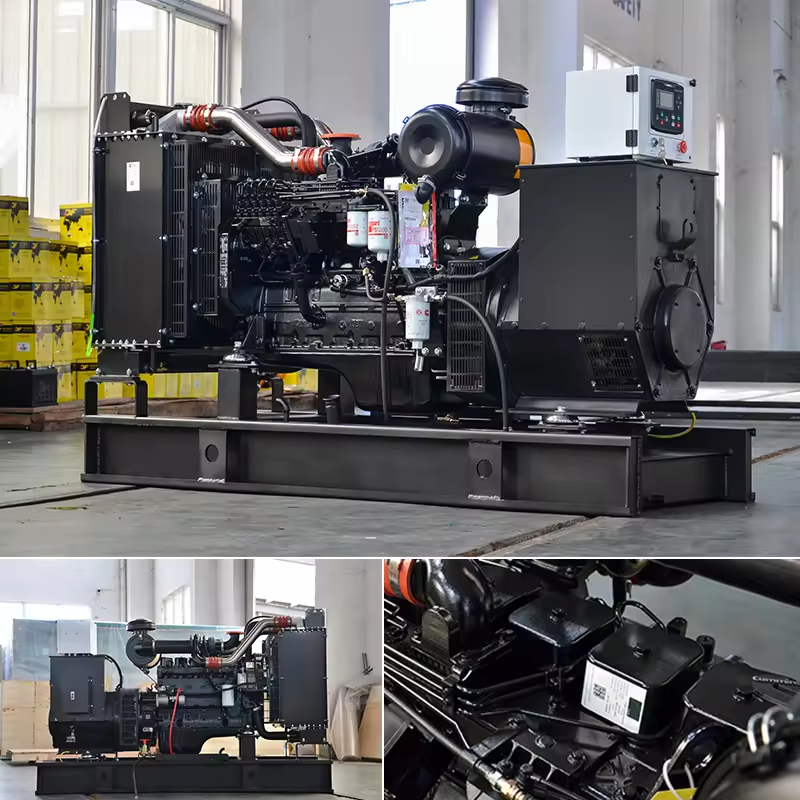
We build from 125 to 3000 kVA and fit Cummins, Perkins, Yuchai or Shangchai depending on the duty and the market. The same 500 kVA set can move 8 to 15 percent in price on the engine choice alone, before anything else is discussed.
The Alternator: Where Copper Decides 15 Percent
The alternator is 15 to 20 percent of the invoice and the least transparent part of it. Four things move the price, and only one of them is printed on the datasheet.
Brand. Stamford and Leroy-Somer carry a premium over Chinese alternators of the same frame, and part of that premium is genuine - tighter voltage regulation, better documentation, easier spares globally. Part of it is the label.
Copper or aluminium windings. This is the big one. An aluminium-wound alternator at the same kVA rating is 8 to 12 percent cheaper and noticeably lighter. It also runs hotter, is less efficient, and shortens the service life of the insulation. In almost all cases the quotation will not say which one you are getting, because the line item just says the frame size.
Insulation class and temperature rise. H-class insulation with a 125 K temperature rise is the normal export standard. Some factories build to F-class and then advertise the H-class temperature rise figure, which is a real and measurable difference in service life at high ambient temperatures.
Single or double bearing. Single bearing is the standard for close-coupled sets and is cheaper. Double bearing costs more and needs a separate coupling, but it isolates vibration better on very large frames.
One question that settles it: ask for the copper weight of the alternator in kilograms, for the specific frame you are being quoted.
A supplier building genuine copper machines will have the number on file. A supplier using aluminium will either not answer or will answer in kilograms that do not match the frame. Two quotes at the same kVA with copper weights 20 percent apart are not the same product.
Control and Switching: Small Line, Most of the Risk
The control panel is 3 to 5 percent of the price and it is the only component whose failure stops the whole machine. It is also where "we can do that too" is most often said and least often meant.
Controller brand. Deep Sea and ComAp are the two names that matter in export markets. A genuine module adds 200 to 400 US dollars over a compatible board. The compatible board will start and stop the engine in a factory test; the difference appears after two years in a humid coastal installation, where a failed board means an outage you cannot diagnose locally.
Manual, auto-start, or AMF. A manual panel starts when someone turns a key. Auto-start starts on a remote signal. AMF - automatic mains failure - is the function most standby buyers actually need: it watches the mains, starts the set when the mains drops, transfers the load, and returns to mains when power comes back. AMF requires a transfer switch, and the transfer switch is a separate priced item.
The transfer switch itself. Mechanically interlocked contactors and motorised breakers are different products at different prices. Transfer time matters more than most buyers expect: 1 second and 10 seconds are both "automatic", and only one of them keeps a server room or a cold store running.
The practical consequence is simple. If your requirement says "automatic start on mains failure", make sure the quotation has a separate line for the ATS. When ATS is bundled into a single total, you cannot tell whether you are buying a proper AMF panel or a contactor with a delay timer. If the project is a hotel, a data room, a clinic or a farm irrigation line, this is the line item that decides whether the backup actually works.
Frame and Canopy: The Easiest Place to Hide Savings
Fabrication is 10 to 20 percent of the invoice and it is where two quotes at the same rating can differ without either supplier being wrong about the hardware inside.
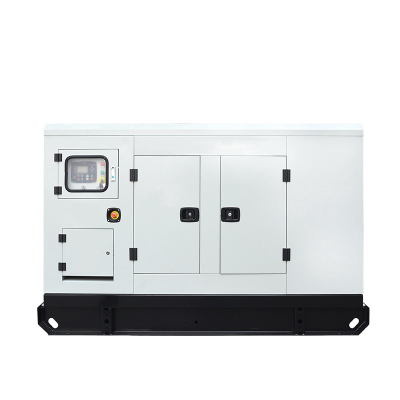
Take four "silent type" 500 kVA sets at four prices. The differences are in five places:
- Sheet thickness. 1.2 mm and 2.0 mm cold-rolled steel differ by 300 to 600 US dollars on a 500 kVA canopy. Nobody measures it on arrival.
- Surface treatment. Wet paint versus powder coating. Inland, both last. Within five kilometres of a coastline, wet paint starts showing rust in two to three years and powder coating does not.
- Acoustic lining. 24 kg/m3 versus 48 kg/m3 mineral wool, with or without a perforated liner. The difference is 5 to 8 dB at one metre - which is the difference between passing and failing a local noise limit.
- Doors, hinges and locks. This is where cheap canopies announce themselves after year five, usually on the day a service technician cannot get the door open.
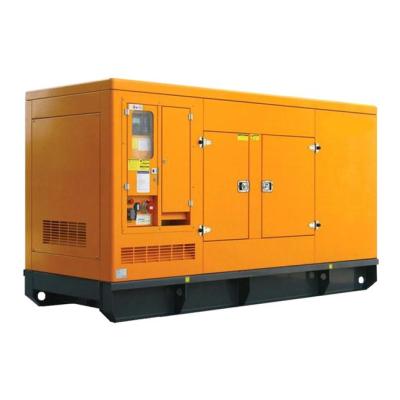
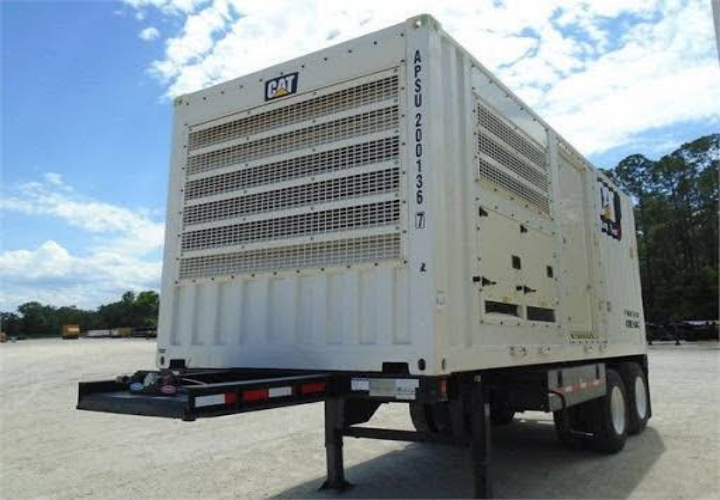
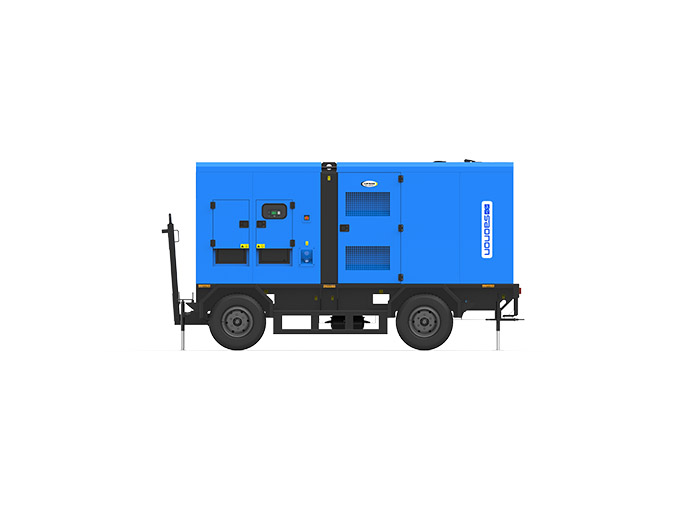
- Form. Containerised sets cost 30 to 50 percent more than a standard canopy and make sense when the machine will be shipped more than once or installed in a remote site. Trailer-mounted sets add another 15 to 25 percent.
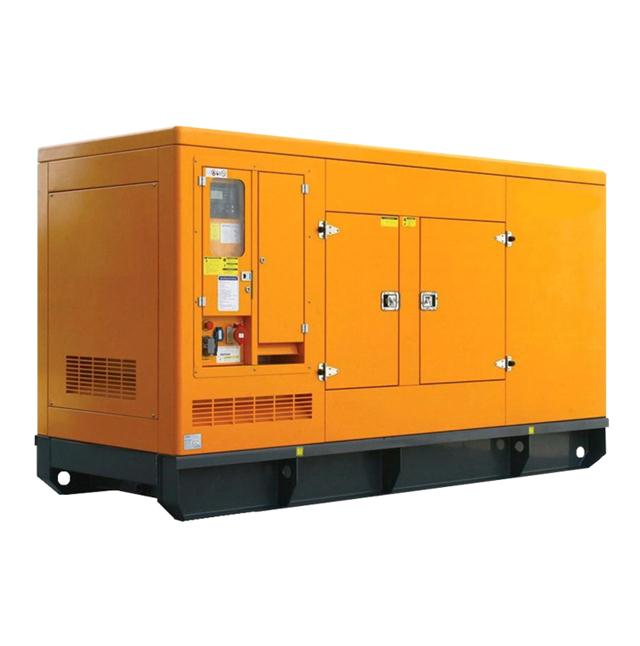
There is a simple way to test whether a canopy price is real: ask for the quotation to show the open-frame price and the canopy premium as two separate lines. A supplier who builds the canopy in-house can split the two. A trader assembling from three factories usually cannot, and the single total hides which one you are buying.
Testing: Cut First, Regretted Longest
Factory testing is 2 to 4 percent of the price. It is the first line buyers remove when a budget is tight, and the one that determines who owns the problem when the set arrives and does not perform.
A complete factory test on a 200-1000 kVA set is not a five-minute start-up. It normally covers:
- No-load run and voltage/frequency stability
- Step loading at 25, 50, 75 and 100 percent, with recovery time recorded
- Protection functions - overspeed, low oil pressure, high coolant temperature, overcurrent
- Insulation resistance and winding resistance
- Control and transfer simulation, including a mains-failure event with the ATS in circuit
The limiting factor is the test bench, and this is where the size of the factory becomes visible in the price. A factory whose largest load bank is 400 kW cannot test an 800 kVA set at full load. It can test it at 50 percent and describe the rest as "checked". Both statements are true, and only one of them tells you what happens at 100 percent load on a 40 degree afternoon.
Our plant runs full-load testing up to 2000 kW, which covers the entire 200-1000 kVA range at 100 percent with headroom. This matters less for a 200 kVA unit and more as you go up the range.
Third-party inspection is a separate cost, typically a few hundred US dollars per visit for SGS, TÜV or Intertek. It is also the only mechanism that settles a quality dispute before the machine leaves the country rather than after it arrives. On a single-unit order it is often skipped; on a multi-unit project it is the cheapest insurance in the whole quotation.
Certificates: 3 to 8 Percent, and Destination-Specific
Documentation is 3 to 8 percent of the price and there is no such thing as a globally valid certificate for a generator set. What is required depends entirely on where the machine will be installed.
| Market | What is normally required |
|---|---|
| European Union | CE marking under Machinery Directive 2006/42/EC and EMC Directive 2014/30/EU |
| Australia / New Zealand | RCM marking, plus installation to AS/NZS 3010 by a licensed electrician |
| Nigeria | SONCAP product certificate before shipment |
| Russia / EAEU | EAC certification under the customs union technical regulations |
| United States | UL 2200 for the set, EPA Tier compliance for the engine |
Within CE there is a further fork that changes both price and lead time. A self-declaration under the directives is one product. A certificate issued by a notified body after reviewing the technical file is another, and it costs more.
We hold CE certification issued by UDEM, certificate number M.2024.206.C109943, registered 20 November 2024 and valid to 19 November 2029, covering ten series and referencing EN ISO 8528-13:2016 among others. We also hold ISO 9001, ISO 14001 and ISO 45001 valid to 29 August 2027, and an 18-page SGS supplier audit report. We do not hold EAC, RCM, SONCAP or UL. For projects in Russia, Australia, Nigeria or the United States we say that plainly at quotation stage rather than after the deposit.
Which brings up what a buyer should actually ask. Not "do you have CE", because the answer is always yes. Ask four things: the certificate number, the issuing body, the exact models covered, and the expiry date. A supplier who can answer all four in writing is selling you a document. A supplier who sends a photograph of a certificate with no number is selling you a picture.
Freight and Packing: The CBM Problem
In the 200-1000 kVA range, volume decides freight more than weight does. A set that is 30 percent smaller in cubic metres can be cheaper to land even when it costs more at the factory gate.
Approximate packed volumes for silent canopy sets, which vary with fuel tank size and canopy design:
- 200 kVA class - roughly 8 to 12 CBM
- 500 kVA class - roughly 14 to 18 CBM
- 1000 kVA class - roughly 22 to 28 CBM
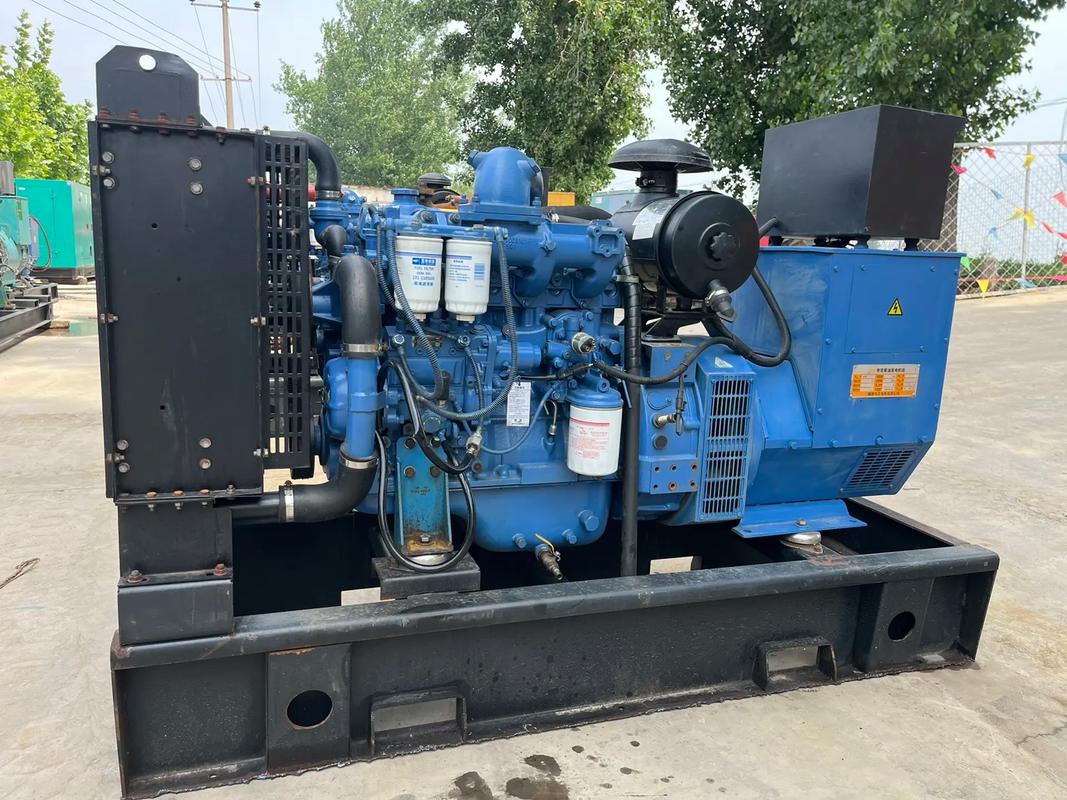
An open-frame set of the same rating is typically 30 to 40 percent smaller than the canopy version. This is a real trade-off, not a trick: a buyer who saves a few hundred dollars by choosing a canopy without checking freight can pay more than that in ocean freight, and again on every future move.
Three more packing variables affect cost and, more importantly, affect whether the machine arrives intact:
Crate type. Export packing should be fumigated timber or plywood that does not require fumigation. Cheap packing that fails inspection at destination costs more than the difference in the crate.
Lifting points and centre of gravity. Both need to be marked on the crate. A 1000 kVA set that tips during unloading is a total loss on the invoice, whatever the insurance says.
How many fit in a 40-foot high cube. This single number often decides between two otherwise equal quotes, because it changes freight per unit. Ask for it explicitly, along with CBM, gross weight and packed dimensions - the same four figures, from every supplier, on the same line of your comparison sheet.
Payment Terms and Volume Carry a Real Cost
Payment structure is not a financing detail. It changes the factory price, because it changes the supplier's cash position and risk, and that cost is priced in whether or not it is shown.
| Terms | Typical effect on unit price |
|---|---|
| 30 percent deposit, balance before shipment | Baseline - usually the lowest price offered |
| 30/70 against copy of bill of lading | 1 to 2 percent higher |
| Irrevocable L/C at sight | 1.5 to 2.5 percent higher, plus bank charges both ends |
| Open account, 60 to 90 days | 3 to 5 percent higher, or declined |
None of these are unreasonable. A supplier financing 70 percent of a machine for two months is lending money, and lending has a price. The problem is when a buyer compares a 30/70-before-shipment price against a 60-day open account price and concludes one supplier is greedy.
Volume works the same way, and the steps are smaller than most buyers expect. One unit to three units typically moves the unit price 5 to 8 percent. Three units to ten units moves it another 3 to 5 percent. The reason is that engines and alternators are bought in batches at the factory, so a single unit arrives with nothing to negotiate on.
The most common mismatch we see in incoming inquiries is a buyer negotiating with ten-unit expectations on a one-unit order, and then feeling overcharged when the number does not move. If the project may grow, say so at quotation stage - a supplier who knows a second and third unit are likely will price the first one differently, because the tooling and purchasing effort amortises.
Why the Price Curve Is Not Linear
Buyers often assume price scales with kVA in a straight line. It does not, and knowing where the steps are helps you decide whether a quote is out of line or simply on the other side of a step.
200 to 500 kVA usually comes in at less than 2.5 times the price. Control panels, canopies, packing and documentation are close to fixed costs across this range, so a 500 kVA set carries the same panel and roughly the same crate as a 200 kVA set.
500 to 1000 kVA steps up. The engine moves from six cylinders to twelve in most ranges, the alternator frame crosses a size boundary, and packed volume crosses the point where one unit no longer shares a container efficiently. All three step at once.
Above 1000 kVA, logistics and lifting start to dominate. The engineering is not dramatically harder; getting it to site is.

A 500 kVA set is a good example of the middle of the range, where most of the cost is engine and alternator and very little is structure. If you want to see how the specification reads at that point, the 500 kVA industrial set page shows the configuration we build at that rating.
Practical consequence: if your load sits near a step - 480 kVA, or 950 kVA - ask for both the nearest size below and the nearest size above. The step is sometimes smaller than the price of being undersized.
What to Cut, What Never to Cut
Almost every project has to cut something. The question is which line, and what happens later. This table is the one we would give a buyer if they asked us to reduce the price.
| Line item | Can it be cut? | What happens afterwards |
|---|---|---|
| Engine brand tier | Yes, one tier down | Longer overhaul intervals lost, resale value lower, spares availability narrower |
| Alternator brand | Yes | Acceptable, but insist on copper windings and get the copper weight first |
| Controller module | Yes, but not for remote sites | Higher failure rate; local diagnosis difficult; spare board becomes essential |
| Canopy steel thickness | Yes | Coastal and humid sites show rust in three to five years |
| Acoustic lining | Yes | Noise may exceed a local limit and cannot be fixed cheaply after installation |
| Factory load testing | Technically yes | You inherit every defect the test would have found, at your site, after shipping |
| Market certification | No, where it is mandatory | Customs refusal; the set cannot legally be energised |
| Third-party inspection | Yes, with risk | No independent evidence if a dispute arises |
| Export packing grade | Not recommended | Higher damage rate in transit, and insurance disputes about packing adequacy |
Two of these are close to non-negotiable in our experience. Certification for a market that requires it, because no amount of discount compensates for a machine that cannot be energised. And load testing at full rating, because the cost of discovering a fault after arrival is usually several times the cost of the test.
Everything else is a genuine trade-off that a buyer is entitled to make, provided it is made knowingly. The failure mode is not cutting - it is cutting without knowing which line was removed. That is why we quote with the split shown, rather than a single number.
Seven Questions That Turn a Quote into a Comparison
Most quotations cannot be compared, not because suppliers are hiding things, but because they answer different questions. These seven items force every quote onto the same basis. Ask them in writing, once, to every supplier.
- Is this price at standby or prime rating, to ISO 8528-1? If the answer is "both", ask for both numbers.
- Is the engine genuine new or rebuilt, and at which ISO 3046 rating is it declared? Ask for the serial number.
- Are the alternator windings copper or aluminium, and what is the copper weight? In kilograms, for that frame.
- What is the exact controller model, and is the ATS a separate line item? A bundled total cannot be verified.
- What load levels does the factory test reach, and can you send a sample test report? A sample report from a previous unit tells you what the test actually is.
- Which certificates apply to this exact model, with number, issuing body and expiry? Photographs of certificates are not documentation.
- What are the packed dimensions, CBM, gross weight, and how many units fit in a 40-foot high cube? These four figures determine landed cost as much as the unit price does.
A supplier who answers all seven in writing is telling you something about how they will handle the order after the deposit. A supplier who answers four and deflects three has told you the same thing.
For the commercial side of the same conversation - who you are actually buying from, and how to verify them before the deposit - the twelve questions to ask a Chinese generator manufacturer covers the supplier checks that sit upstream of price. If your project includes a maintenance contract, the spare parts list for 200-1000 kVA sets is worth reading before you fix the warranty wording. And if the machine will carry your own brand, the OEM and private label process explains which five physical points on a set actually change, and what that does to lead time rather than to price.
The Number at the Bottom Is a Summary, Not a Price
A generator quotation is a set of decisions about what is inside a steel box, compressed into one figure. Two figures that differ by forty percent are usually describing two different machines, and the difference is almost always findable: a rating convention, an engine tier, a winding material, a canopy gauge, a test that was not run, a certificate that does not exist for that market.
None of that requires the buyer to become an engineer. It requires asking the same seven questions of every supplier and writing the answers in the same seven rows. The quote that survives that comparison is not necessarily the cheapest - it is the one you can still defend to your own client eighteen months later, when the set is running and something has gone wrong.
If you would rather start from a specification than from a price, send us the load profile rather than a kVA figure. We will tell you what the rating should be, what the engine options are at that point in the range, and what the certificate position is for your destination - including where we do not hold it.