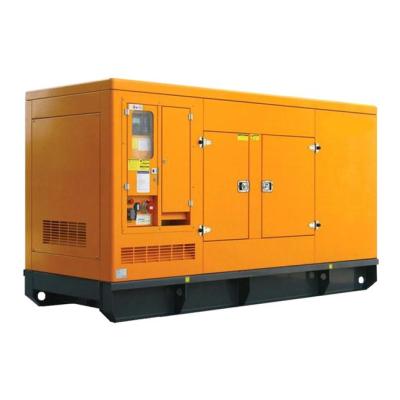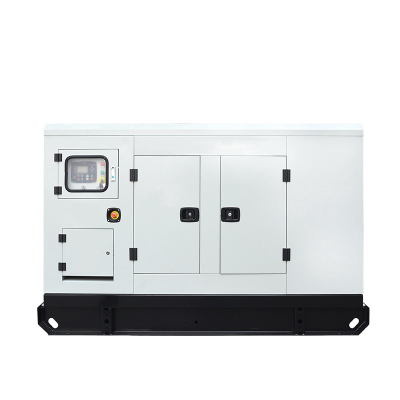
How to Choose a Diesel Generator Manufacturer in China: 12 Questions to Ask
How to Choose a Diesel Generator Manufacturer in China: 12 Questions to Ask
Anyone can send you a price for a 500 kVA set within a day. Far fewer can tell you which engine is inside it, who tested it at full load, what their CE certificate actually covers, and who answers the phone in year three. These twelve questions are the difference.
What This Guide Covers
- The one distinction that changes everything
- Questions 1 to 3: factory, engine, and the test that proves it
- Questions 4 to 6: certificates, alternator, and the parts nobody asks about
- Questions 7 to 9: controls, lead time, and warranty that survives the border
- Questions 10 to 12: spares, documents, and proof before the balance
- How traders and manufacturers answer differently
- Four answers that should stop the conversation
- FAQ
The One Distinction That Changes Everything
Several hundred companies in China will sell you a diesel generator set. A much smaller number actually build one. Both groups quote prices, both send catalogues, both use the word factory, and to a buyer reading an email from eight thousand kilometres away they look identical.
The distinction is not about honesty. Trading companies perform a real function: they consolidate, they handle export paperwork, they carry stock. The problem starts when a trading company presents itself as a manufacturer, because then every answer downstream becomes unreliable. The price carries an invisible margin you cannot see or negotiate. The lead time is quoted for an order the trader has not yet placed with a factory you have never spoken to. The warranty is a promise made by someone who does not control the production line.
A generator set in the 125 kVA to 3,000 kVA range is a long-life asset, typically fifteen to twenty years in service. The supplier relationship outlasts the purchase by a decade or more. That is why the questions below are weighted the way they are: not toward the lowest price, but toward finding out who you will actually be dealing with when something fails in year four.
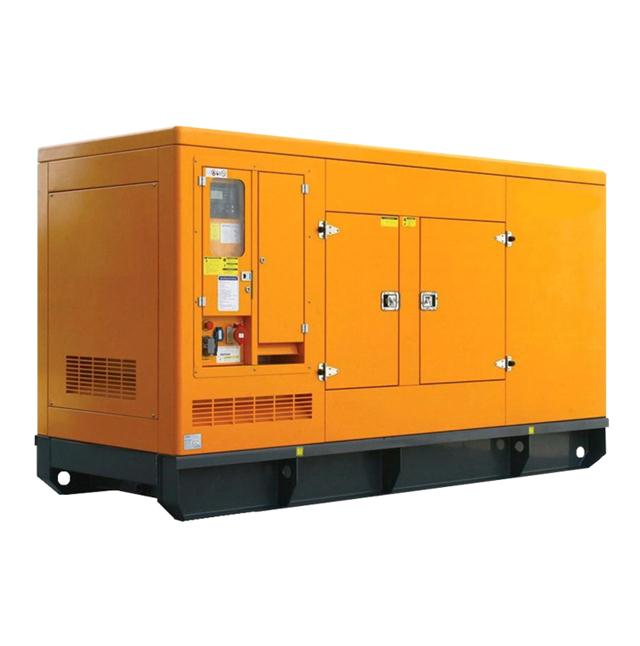
Questions 1 to 3: Factory, Engine, and the Test That Proves It
1. Is the factory actually a factory?
Ask for the business licence and read the registered scope of business. A manufacturer's licence will include production or manufacturing activity. A trading company's licence typically lists sales, import and export, or technical services. This single document settles more arguments than any amount of email reassurance.
Then ask for the street address of the plant, and for photographs of the assembly line rather than of finished products. A product photograph proves someone owns a camera. An assembly line proves someone owns a production process.
You can verify independently. Satellite imagery of the stated address shows whether there is an industrial building of the claimed size. The unified social credit code on the licence can be checked against Chinese corporate registries. Neither check takes more than ten minutes, and both are worth doing before a deposit.
Red flag: the company name on the quotation differs from the name on the factory gate, and the explanation is vague rather than specific.
2. Which engine, and is the builder authorised to use it?
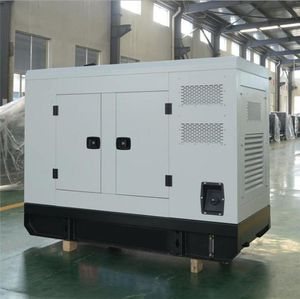
Almost every Chinese generator manufacturer is an assembler rather than an engine maker. This is normal and not a weakness: the set is a package of engine, alternator, control system and enclosure, and the skill lies in integrating them well. What matters is that you know exactly which engine you are buying.
The engines you will meet most often in this class are SDEC, Yuchai, Weichai, Cummins and Perkins. Each has a model number, and each model has a rated output band. Ask for the specific model, not the brand. Asking for the brand alone is how buyers end up with a set whose engine is two tiers below what they assumed.
Authorization matters for one practical reason: warranty pass-through. A builder holding an engine maker's authorisation can claim on the engine warranty on your behalf. A builder without it can only absorb the cost itself, which is a different conversation when a cylinder head fails at 6,000 hours.
Also ask whether the engine is new or rebuilt. A genuinely low price on a familiar brand usually has an explanation, and rebuilt engines are the most common one.
Red flag: the engine is described only as a brand, with no model, and the price sits noticeably under every other quote for the same rating.
3. Do they load test at full rated output, and will you see the report?
This is the single most useful question in the list, and the one buyers most often skip.
Starting a set and running it for five minutes at no load is not a test. It confirms the engine starts and the alternator turns. It does not confirm the set delivers its rated output, that voltage holds under load, that frequency stays inside tolerance, or that the cooling system copes. A set can pass an unloaded run and still fail on site at 80 percent load in summer.
A proper test uses a resistive load bank at 100 percent of rated output, held until coolant and oil temperatures stabilise, which commonly takes one to four hours. The report should record real numbers: voltage and frequency at several load steps, current per phase, coolant temperature, oil pressure, exhaust temperature. It should carry the serial number of the set that was tested.
Ask two things: how large is the test bank, and can the report be tied to your unit's serial number? A test report without a serial number is a sample, not a record.
Our own test bank is rated at 2,000 kW, and every set we build up to that rating is tested at full load before it ships. For buyers who want to understand what the test is actually looking for, this article on load bank testing goes through the procedure and the readings that matter.
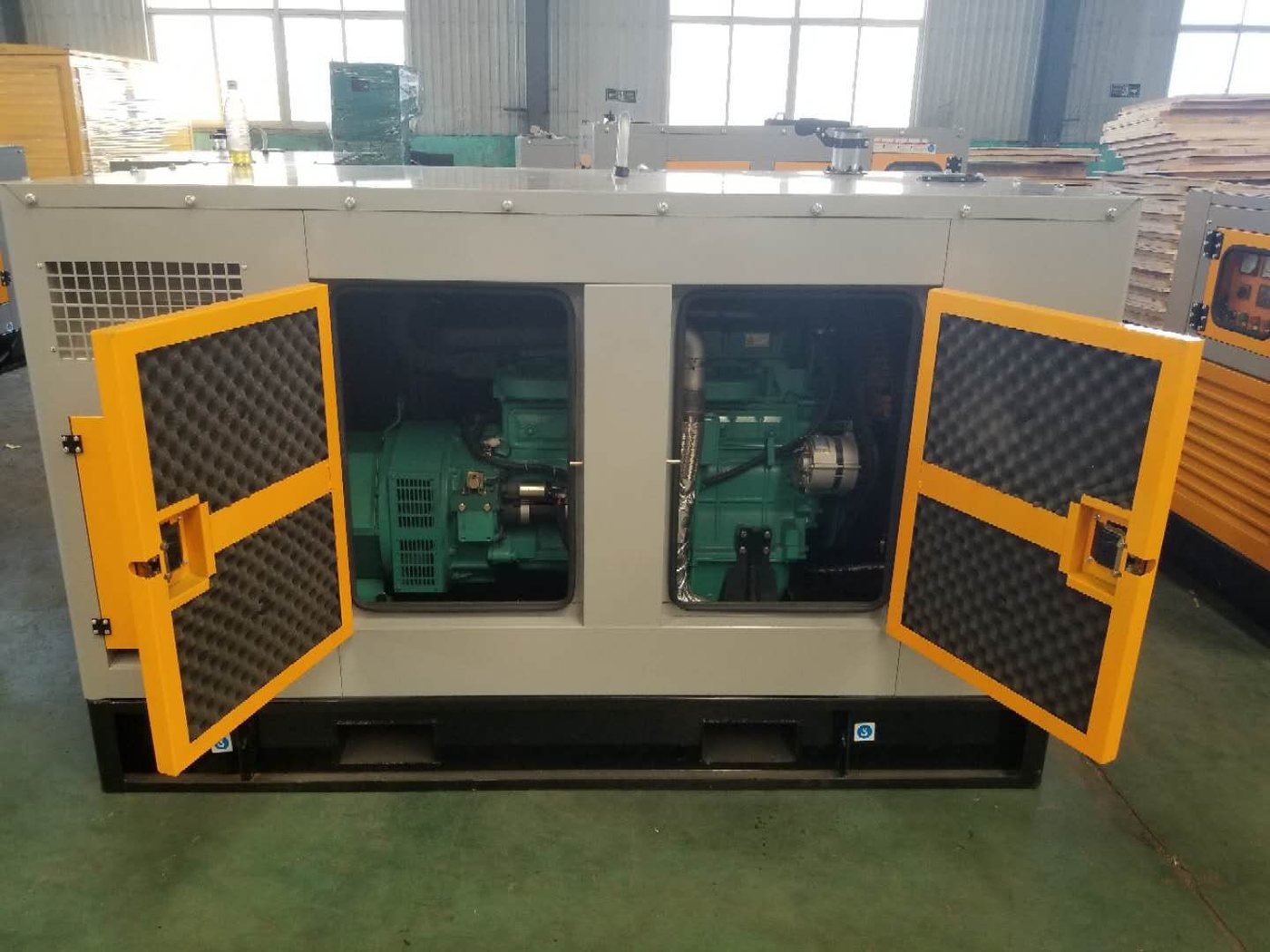
Red flag: a video of the set running, offered instead of a report with numbers on it.
Questions 4 to 6: Certificates, Alternator, and the Parts Nobody Asks About
4. What exactly does the CE certificate cover?
We have CE is not information. CE marking in Europe is a declaration, and the useful part is the paperwork behind it. Five elements turn a claim into something you can check:
- Which body issued the certificate, and whether it is a notified body
- Which directives it was assessed against, most often Machinery Directive 2006/42/EC and EMC Directive 2014/30/EU for a generating set
- The certificate number, in full
- The expiry date
- Which models or series the certificate covers
The last one is where problems hide most often. A supplier may hold a valid certificate that covers a different range from the set you are buying, and nothing on the front page reveals it. Ask for the certificate itself, not a logo.
For reference, ours is issued by UDEM under the Machinery Directive 2006/42/EC and EMC Directive 2014/30/EU, certificate number M.2024.206.C109943, valid until 19 November 2029, covering ten series.
Red flag: the certificate has no number, has expired, or lists a model range that excludes the set being quoted.
5. Do they hold ISO 9001, 14001 and 45001, and can you see the audit report?
The three standards cover quality management, environmental management, and occupational health and safety. For a buyer the practical value is the audit trail: a certified plant has documented procedures for incoming material inspection, in-process checks and final testing, and an external auditor has looked at whether those procedures are followed.
Two checks matter. First, the certificate must be current: a lapsed ISO certificate is a historical document. Second, ask for the audit report or the certification body's name so you can verify it independently.
Ours are valid until 29 August 2027, and the SGS audit report is available on request.
6. What alternator is inside, and what is its excitation method?
Buyers spend their attention on the engine and almost none on the alternator, which is the half of the set that actually makes the electricity. The alternator determines waveform quality, voltage regulation under load steps, insulation class, and how the set behaves when a large motor starts.
Ask four things: the alternator brand, the insulation class, the ingress protection rating, and the excitation method. Brushless self-excitation with an automatic voltage regulator is the mainstream configuration for industrial sets, and it is what you should expect unless there is a specific reason otherwise.
An alternator of unknown origin is not automatically bad, but it is unverifiable, and unverifiable is the wrong position to be in when the set is feeding a hospital or a data hall.
Red flag: the question about the alternator brand goes unanswered while every other question gets a fast reply.
Questions 7 to 9: Controls, Lead Time, and Warranty That Survives the Border
7. Which control panel, and what does it actually do?
The control panel is how the set behaves when nobody is watching. Ask for the controller make and model, then ask which functions are enabled: automatic transfer switching, automatic mains failure, remote start, synchronisation with other sets, and remote monitoring.
For most buyers remote start and an ATS interface are enough. For telecom sites, cold stores and data halls, remote monitoring stops being a feature and becomes a requirement, because the alternative is discovering the failure when the load drops.
Ask for the wiring diagram and the controller manual, not just the model name. A controller nobody on your side can configure is a controller you will not use.
8. What is the real lead time, and what controls it?
Lead time in this industry is almost never set by assembly. Assembling a 500 kVA set takes days. The variable is engine availability, and engine production slots are allocated weeks ahead. A supplier who quotes the same delivery for every configuration is quoting a hope.
Break the question into three. Is the engine model in stock, and if not, what is its production slot? Is the set a standard build or a custom one? Customisation adds time in proportion to what is changed: a canopy, a container frame, a trailer, a non-standard voltage, a special paint specification, all add their own lead time on top of the base set.
Ask for the answer in writing, and ask what has slipped recently. A supplier who can name a recent delay understands their own supply chain. One who claims nothing ever slips does not.
Red flag: any rating, any voltage, any frequency, and a single delivery figure for all of them.
9. What does the warranty cover, and who performs it where you are?
Warranty has three dimensions that are usually conflated in the sales email: duration in months, running hours, and whichever comes first. Twenty-four months or 2,000 hours, whichever occurs first, is a common structure. Ask which one, and ask what is excluded, because filters, belts, batteries and consumables normally are.
Then ask the question that decides whether the warranty has any value at all: who performs the work in your country? Most Chinese factories do not have service engineers resident abroad. In practice there are three arrangements, and you should know which one you are buying: spare parts shipped plus remote technical support, an authorised local service provider, or your own maintenance team with factory backing.
Ask specifically how a warranty spare part reaches you, and who pays the freight. A part that travels by sea inside the next container can take eight weeks to arrive, which for a standby set may be acceptable and for a prime power set may not.
Red flag: a promise of engineers on site within 24 hours anywhere in the world, with no named local partner.
Questions 10 to 12: Spares, Documents, and Proof Before the Balance
10. Will they give you a spare parts list with the set?
There is a difference between the loose spares shipped in the crate and a recommended stock list for the first two years. Ask for the second one.
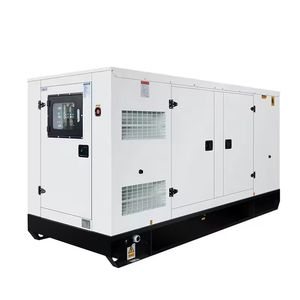
The useful version is close to a bill of materials: part number, description, recommended quantity, and lead time. Then apply a filter that most buyers learn too late. Engine parts, filters, belts, gaskets and pistons, are available globally through the engine maker's network. Parts unique to the set, such as a controller module, a canopy latch, a radiator, an exhaust silencer matched to that enclosure, exist only at the factory that built it.
That second category is where downtime actually comes from, and it is the reason to keep a small stock of set-specific parts rather than relying on air freight after a failure.
11. What are the payment terms, and exactly which documents arrive?
Payment structures in this trade are fairly standard: a deposit by telegraphic transfer with the balance against a copy bill of lading, or a letter of credit for larger orders. The terms are negotiable within limits, and the structure tells you something about how the supplier manages risk, but it is not the part that causes disasters.
Documents do. Before you sign, ask for the full document list to be written into the proforma invoice, and check it against what your customs broker needs. The usual set is a commercial invoice, a packing list, a bill of lading, a certificate of origin, a CE declaration of conformity, the factory test report and loading photographs.
The certificate of origin deserves specific attention. Several countries grant preferential duty under a particular form of origin document, and the difference between the standard certificate and the preferential one can be a measurable percentage of the shipment value. Ask which form they will issue before the order, not after the vessel sails.
12. Can you see the set running before you pay the balance?
This is the cheapest risk reduction available, and it costs nothing to ask for.
Ask to attend the load test by video call, at a time you choose rather than one chosen to suit the factory. Ask the camera to show the set's nameplate and serial number, then the instrument readings, then the test report being filled in. The point is not to audit the engineering. The point is to confirm that the set on the test bank is the set on your invoice.
For larger orders, a third-party pre-shipment inspection adds an independent record, and most inspection companies will attend a load test if it is scheduled in advance.
Red flag: reluctance to show the nameplate, or a video call offered only after the balance is paid.
How Traders and Manufacturers Answer Differently
The questions above are not a trap for traders. They are a way to find out which kind of company you are talking to, because the answer changes what you should expect to pay and how much of the risk you carry yourself.
| Question | Trading company | Manufacturer |
|---|---|---|
| Business licence scope | Sales, import and export | Production and manufacturing |
| Engine model and authorisation | Brand only, authorisation unclear | Specific model, authorisation held |
| Load test evidence | Sample report, no serial number | Report tied to your unit |
| CE certificate | Logo, or certificate for another range | Number, directives, expiry, model list |
| Lead time | One figure for all configurations | Broken down by engine slot and options |
| Warranty execution | Passed back to an unnamed factory | Named arrangement, parts and labour defined |
| Set-specific spares | Cannot source after the order | Part numbers and lead times available |
None of this means a trading company cannot serve you well for a small, standard, low-value order. It means the calculation changes as the rating and the criticality rise. At 500 kVA feeding a factory, a trader with stock and a good relationship can be the right answer. At 2,000 kVA feeding a process that cannot stop, the identity of the builder stops being a detail.
Four Answers That Should Stop the Conversation
Most of this guide is about gathering evidence. These four are about recognising the absence of it.
A factory address that cannot be pinned down. A city name is not an address. If three requests produce a district but never a street, the plant may not be theirs to show.
A CE certificate without a number. Not a formatting quibble. The number is what makes the claim checkable, and its absence is usually deliberate.
Any specification, any delivery. Sets are not configured on demand like software. A supplier who agrees to every voltage, frequency and enclosure without asking a single question has not understood the requirement.
A warranty longer than the industry supports. Multi-year whole-set warranties exist, but they come with service networks and priced into the quotation. A five-year promise from a supplier with no presence in your country is a sentence, not a commitment.
What all four have in common is that they are cheap to say and expensive to honour. The questions in this guide are designed to move the conversation from what a supplier says to what a supplier can show.
What Our Own Numbers Look Like
It would be unfair to hand over a checklist without submitting to it. The figures below are the ones a buyer would ask us for, and each is verifiable.
Our range runs from 5 kW to 18 kW in petrol and diesel small sets, and from 125 kVA to 3,000 kVA in industrial sets, open frame, silent canopy, container mounted and trailer mounted. Voltages from 230 V to 10,500 V, at 50 or 60 Hz. Engines from SDEC, Yuchai, Weichai, Cummins and Perkins, with alternators in brushless self-excitation configuration.
Certification is CE under the Machinery Directive and EMC Directive, issued by UDEM as M.2024.206.C109943 and valid to 19 November 2029, together with ISO 9001, ISO 14001 and ISO 45001 valid to 29 August 2027 and an SGS audit report available on request. Every set up to 2,000 kW is load tested at full rating before shipment.
Where we cannot help, we say so. Engines designed to run on hydrogen as the primary fuel are a separate product class and not something we build.
FAQ
Is a Chinese diesel generator actually cheaper, and why?
It is usually cheaper, and the reasons are structural rather than mysterious. Labour and fabrication costs are lower, the domestic supply chain for frames, canopies and radiators is deep, and competition among several hundred builders compresses margin. The gap narrows considerably once you specify a European engine, a European alternator and a European controller, because at that point most of the bill of materials is imported. Compare like for like on the bill of materials, not on the headline rating.
How do I verify a CE certificate myself?
Take the certificate number and the issuing body's name, then check them on that body's own website rather than on the supplier's. Confirm four things: the certificate is current, the directives match what your market requires, the model range includes the set you are buying, and the manufacturer name on the certificate matches the company invoicing you. The last check catches certificates borrowed from a related company.
What is a normal lead time for a 500 kVA set?
There is no single number, and any supplier who offers one without asking about engine availability and options is guessing. What you can do is ask for the lead time to be broken into engine production slot, assembly, and testing, then compare that breakdown across suppliers. The breakdown is far more informative than the total, because it shows which part of the chain the supplier actually controls.
Should I visit the factory before ordering?
If the order is large enough to justify the trip, yes, and ask to see the test bank in operation rather than the showroom. If a visit is not practical, a scheduled video call during a load test covers most of the same ground, provided you choose the time and ask to see the nameplate. What matters is that you see evidence generated for your order, not a presentation prepared for visitors.
Where to Go Next
If you are still at the stage of defining the rating rather than choosing the supplier, the diesel generator buying guide walks through sizing, duty class and site conditions in the order a specification is normally built.
Two related reads are worth your time. This piece on Chinese engine technology explains why the engine brand inside the set matters more than the set's own badge. And for the verification step, load bank testing sets out what a genuine full-load test records.
If your specification is already written and you want it checked against what can actually be built, send it across. A specific answer on a specific rating is more useful than a catalogue.