Diesel Generator OEM and Private Label: How Custom Branding Works at the Factory
Diesel Generator OEM and Private Label: How Custom Branding Works at the Factory
Nearly everything published about generator OEM comes from a sales page, which is why it all sounds the same. This is written from the other side of the transaction: what a branding request actually changes on a 125 to 3,000 kVA set, which of those changes can quietly invalidate a certificate, and why the minimum batch has very little to do with how many units you order.
What This Article Covers
- The five places branding actually lands
- The six steps, in the order they happen
- What can be changed and what cannot
- The engine badge problem
- Why certification follows the manufacturer
- Where the minimum batch comes from
- Three models, compared honestly
- What your purchase order must say
- Four mistakes that cost real money
- What our own line looks like
- Questions buyers ask us most
The Five Places Branding Actually Lands
Ask a buyer what private label means and most will answer "you put my logo on it." Ask someone who runs a production line and the answer is longer, because on a generator set the brand reaches five separate physical locations, and each one is produced by a different person with a different lead time.
1. The nameplate
A riveted metal or etched stainless plate, usually mounted on the base frame near the controller or on the canopy panel. It carries the manufacturer's legal name, model designation, serial number, rated and standby output, frequency, voltage, and the reference numbers of any certification the set is covered by.
This is the single most consequential piece of branding on the machine, and it is the one buyers think about last. When a set is stopped at a border or audited on site, this plate decides who is legally responsible for it. Changing the name on it is not a graphics job. It is a decision about liability.
2. Livery and graphics
The canopy colour, the logo placement and size, and the accent stripe. This is the part buyers picture, and it is also the cheapest part to change. RAL colour codes are the practical unit here: a buyer who says "our brand green" and a buyer who says "RAL 6018" get very different results on the first article, and only one of them gets a match on the second batch.
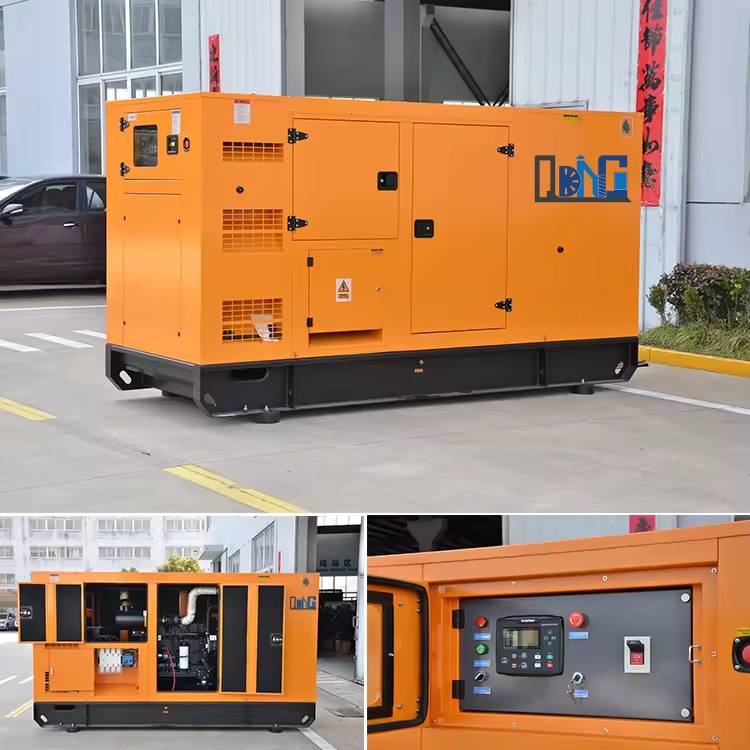
The image above shows why placement needs to be fixed in writing. Silkscreen on a canopy sits across panel seams, door hinges and ventilation louvres. A logo that looks correct on a flat artwork file can end up cut in half by a door line if the position is not specified in millimetres from a fixed reference point.
3. The controller interface
Modern controllers such as Deepsea, ComAp or SmartGen display a start-up screen, an alarm banner and a language menu. Some of that is configurable, and buyers often assume all of it is. In practice the controller vendor controls what can be re-badged, and the answer differs by model. It is worth asking before you promise your own customers a custom boot screen.
4. Documentation
Operation manual, wiring diagram, commissioning sheet, warranty card, and the packing list. These are produced in-house and are the most flexible branding surface of all. Language coverage matters more than people expect: a manual in the right language is worth more to an end user than a logo in the right colour.
5. Packaging
Export crate marking, shipping marks, pallet labels and the outer carton print for accessories. This is where small inconsistencies cause disproportionate problems, because a crate that arrives at a port with a brand that does not match the invoice description invites questions nobody wants to answer in a container yard.
The practical consequence: a branding brief that says "our logo, our colour" will produce a machine that satisfies nobody. A brief that lists five locations, each with a specified file, colour code, position and language, produces a machine that can be repeated on the second order without a single email.
The Six Steps, in the Order They Happen
Buyers tend to imagine OEM as a shortcut around the normal order process. It is not a shortcut; it is the normal process with an extra decision layer at the front and an extra verification layer at the end. On our own line the sequence runs like this.
Step one: technical and appearance requirements
The buyer submits the electrical specification, the configuration, and the appearance requirements together. Appearance submitted separately, after the electrical spec is agreed, is the most common cause of delay we see, because a canopy colour change can force a re-quote on the panel and frame.
Step two: commercial terms and a signed manufacturing contract
Including who owns the artwork, who owns the tooling, and what happens to both if the relationship ends. This clause is routinely skipped and routinely regretted. If the factory paid for the silkscreen frame and the buyer paid for the artwork, ownership needs to be written down before the first batch, not after the third.
Step three: detailed configuration list and formal quotation
Not a price. A configuration list that itemises engine make and model, alternator, controller, canopy construction, base tank capacity, paint system, documentation language and packaging. A quote without this list cannot be compared against another supplier's quote, and that is usually the point of leaving it out.
Step four: advance payment against the contract
OEM orders sit on a different cost curve than catalogue orders, because tooling and artwork are paid before any steel is cut. That is why the advance stage is where the schedule is genuinely committed rather than merely promised.
Step five: scheduling and production
The branding work runs in parallel with assembly, not after it. Nameplates and labels are produced while the set is being built; canopy painting is scheduled with the batch, because a single custom colour means the paint line has to be cleared and cleaned before and after. This is also the stage where a late artwork change becomes expensive rather than inconvenient.
Step six: inspection, balance payment, shipment
The set is tested, documented, crated and released. For a branded order there is one additional check that is easy to forget: verify the nameplate against the certificate and against the commercial invoice, in that order, before the crate is closed. Catching a mismatch at this point costs an hour. Catching it at destination costs a shipment.
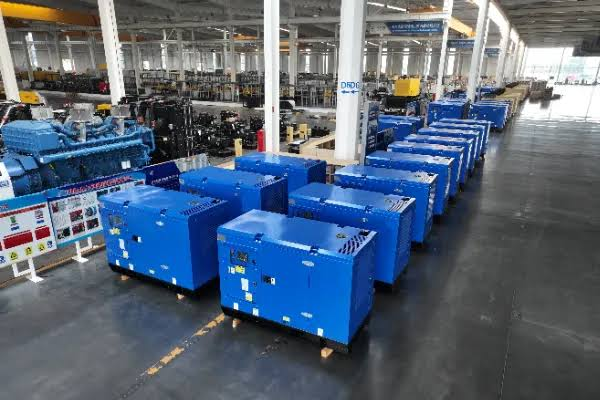
A branded batch leaves the line as a batch. That matters for the buyer who plans to reorder: consistency between batch one and batch two is a production discipline question, not a design question, and it is the thing to test with a small order before placing a large one.
What Can Be Changed and What Cannot
This is the table we would send to any buyer who asks "can you customise it," because the honest answer is that some of it is free, some of it costs money, and some of it should never be done at all.
| Zone | Typical items | What it costs you |
|---|---|---|
| Free to change | Canopy colour from an RAL code, logo position on flat panels, manual language, packing marks, accessory carton print | Artwork preparation and a minimum print run. No engineering change. |
| Changeable with cost | Controller make and model, canopy door layout and service windows, alternator brand, base tank capacity, canopy steel thickness, socket outlets and distribution options | Re-quote on affected components, and a schedule slot rather than a stock build. |
| Should not be changed | Engine block and its original badge, the manufacturer name on the certification, mandatory safety labels and their wording | Not a cost question. These changes put the certificate, the warranty and the customs declaration into conflict with each other. |
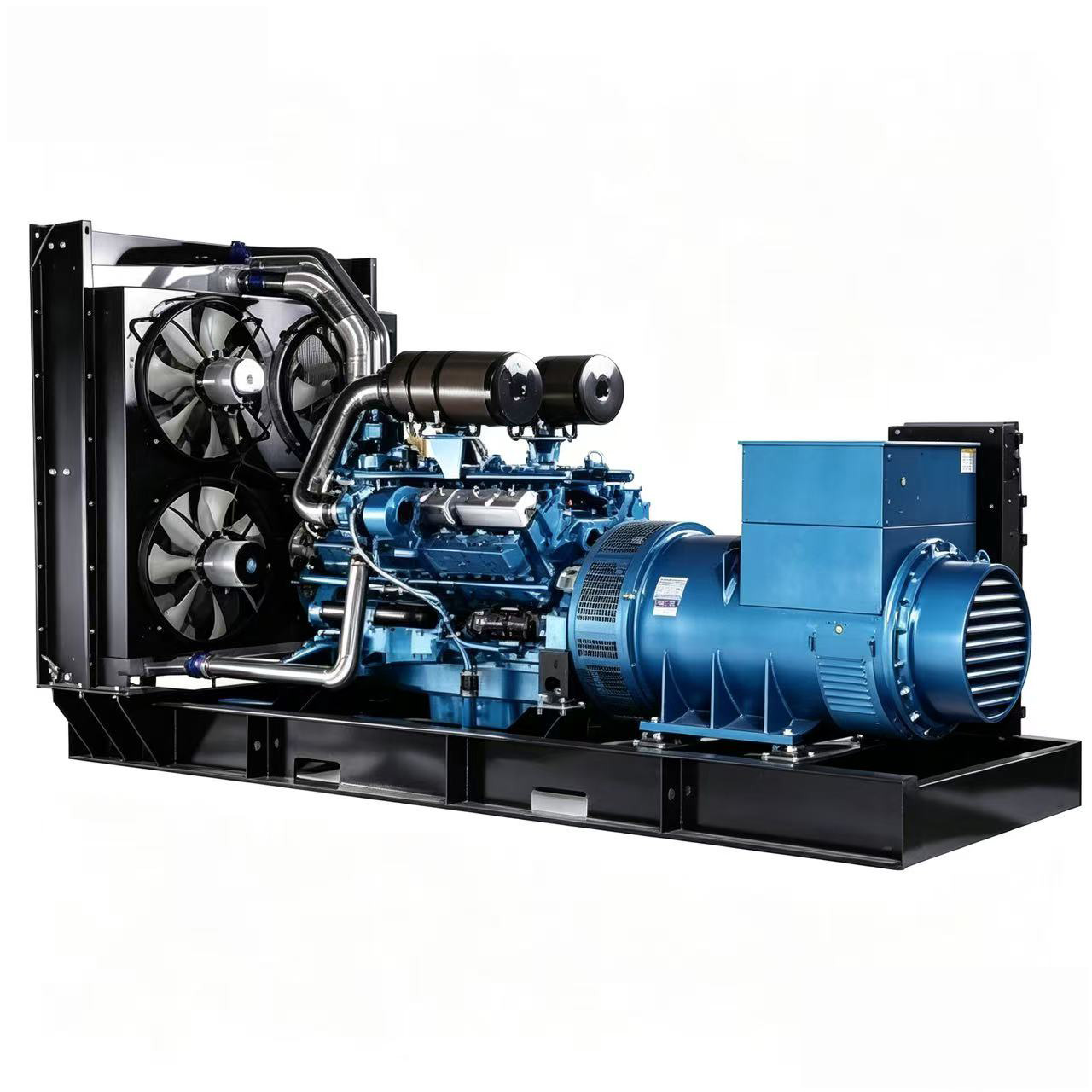
Open frame and silent canopy sets are branded in the same five locations, but the work is not equivalent. On an open set the engine and alternator are on display, so the visual credibility of the machine rests on the components themselves rather than the paint. Buyers who plan to show their equipment to end users tend to discover this during a tender presentation, not before it.
The one thing buyers ask for that we push back on
Requests to change the engine badge. Not because it is difficult, but because it is the fastest way to turn a compliant set into a non-compliant one. That deserves its own section.
The Engine Badge Problem
Engine manufacturers license the use of their name and marks within defined limits: specific models, specific power bands, specific territories, and specific conditions about who may apply the badge and to what. A licence to brand one product family at one power range says nothing about any other product.
We hold OEM authorisation for Yuchai gasoline engines in the 5 to 18 kW range. That sentence is worth reading twice, because every word in it is a limit: a named manufacturer, a named fuel type, a named power band. It is not a general permission to apply a Yuchai badge to any generator we build, and it certainly is not permission to apply it to a diesel set.
Buyers occasionally ask us to fit a badge that does not match the engine inside, usually because the badge is easier to sell in their market. The request is understandable and the answer is no. The consequences stack up in a specific order:
- The nameplate and the engine no longer agree, so a service technician orders the wrong parts on the first breakdown.
- The warranty becomes contestable, because the engine maker has no record of supplying that unit.
- If the set is inspected, the discrepancy becomes a documentation offence rather than a commercial disagreement.
- Whoever sold it downstream carries the exposure, which is usually the buyer, not the factory.
What to do instead: keep the engine badge exactly as it left the engine plant, and put your brand everywhere else. Your name on the canopy, the controller, the manual and the crate; the engine maker's name on the engine, where it belongs and where it also happens to be a selling point. A set that visibly contains a genuine branded engine is easier to sell than one that hides it.
Why Certification Follows the Manufacturer
This is the part of private label that catches experienced importers, because it is invisible until something goes wrong.
A CE certificate is issued to a legal entity, not to a product in the abstract. Ours is held by the manufacturer, certificate number M.2024.206.C109943, issued by UDEM, valid until 19 November 2029. Our management system certificates under ISO 9001, ISO 14001 and ISO 45001 run to 29 August 2027. Those numbers belong to the company that was audited.
Now change the nameplate. If the plate now says your company is the manufacturer, but the certificate and the declaration of conformity still name the original factory, the document chain is broken. Nothing about the machine has changed. The paperwork no longer describes it truthfully, and that is the definition of a compliance failure.
Three arrangements that do work
| Arrangement | Who is the manufacturer on the plate | Who issues the DoC |
|---|---|---|
| Distributor branding | The factory, with your brand presented as distributor or exclusive partner | The factory, referencing the existing certificate |
| Importer branding | Your company, as importer placing the set on the market | Your company, on the basis of your own technical file |
| ODM manufacturing | The factory, as the contract manufacturer behind your brand | The factory, with the brand relationship stated in the contract |
All three are legitimate. They differ in who carries the obligation and what documentation you must be able to produce on demand. What does not work is printing your company name on the plate while relying on someone else's certificate without a written arrangement that explains the relationship.
The bigger trap: certifications the factory does not hold
CE, EAC, RCM, SONCAP, UL and EPA are separate systems with separate holders, and holding one says nothing about the others. If a buyer needs a mark we do not hold, the correct answer is that we do not hold it, followed by a conversation about what that means for their project. A supplier who says yes to every mark a buyer names is telling you something about how they answer questions in general.
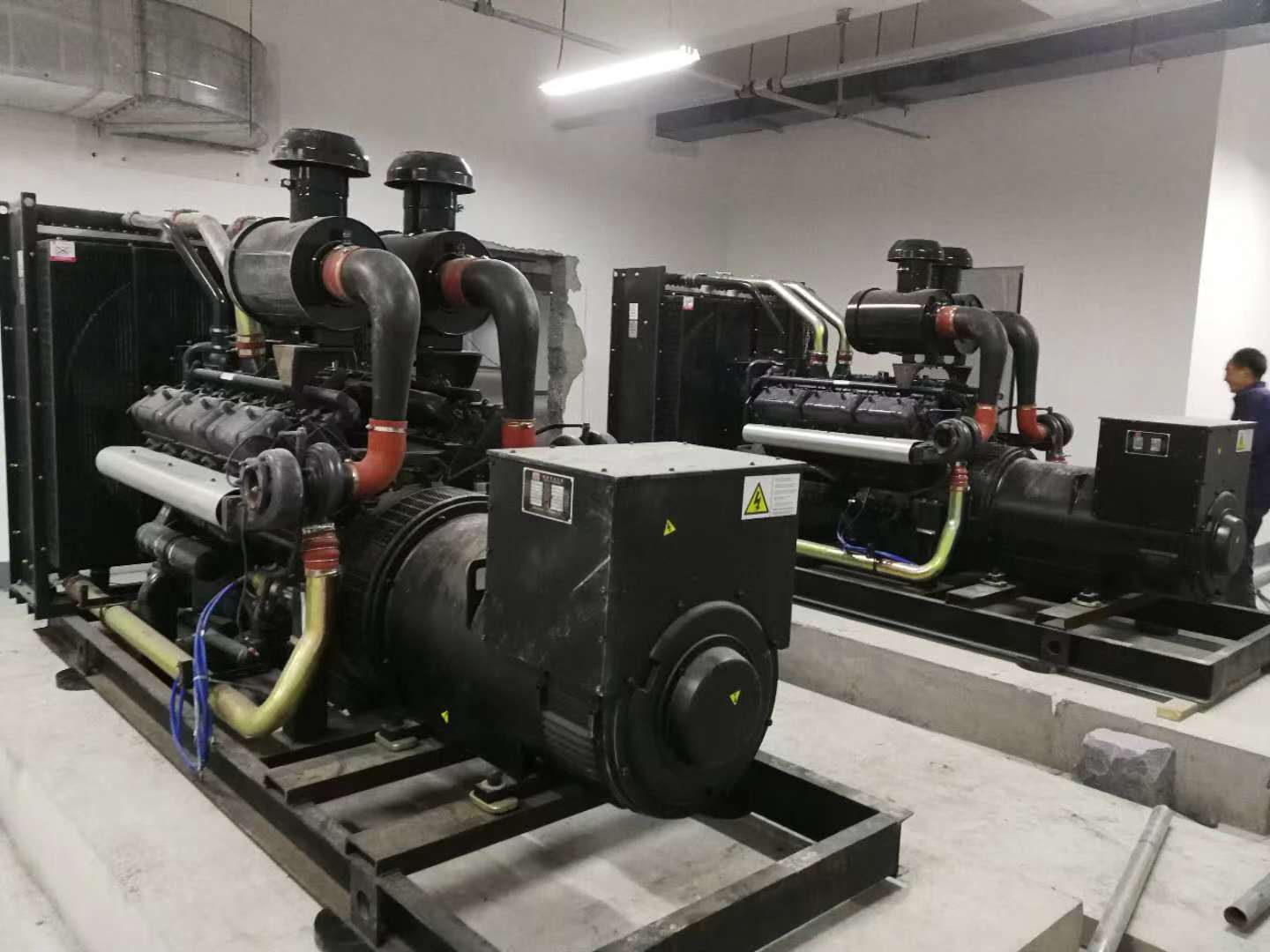
Large frame sets make this more acute, not less. Above a few hundred kVA the set is frequently part of a permitted installation, which means the documents are reviewed by someone whose job is to find gaps. The higher the power, the less tolerance there is for a nameplate that disagrees with a certificate.
Where the Minimum Batch Comes From
Buyers usually assume the minimum order quantity is a policy: some number the factory picked to protect its margin. It is more useful to think of it as a calculation, because then you can influence it.
The floor is set by the fixed cost of the change, not by the number of generators. Fixed costs in a branding job come from six places:
- Nameplate and safety label tooling. Each unique plate layout needs its own artwork and, for etched stainless, its own production setup.
- Paint line changeover. A custom colour means clearing and cleaning the line before and after the batch, which is charged once regardless of batch size.
- Silkscreen or decal preparation. A screen frame or a die-cut decal set is made for your artwork specifically.
- Documentation typesetting. Manuals and wiring diagrams in a new language or a new layout are a one-time engineering task.
- Crate printing and shipping marks. Printing plates for crate stencils are made per design.
- First-article approval. Someone has to build one, photograph it, and get your written approval before the batch runs.
Notice what these have in common: none of them gets cheaper as the order gets bigger, and none of them is avoided by ordering more units. That is why the practical advice is to move the expensive changes later rather than to negotiate the number down.
The sequence that works
First order: change only what lives on the visual layer. Colour from a standard RAL code, logo on flat panels, your language in the manual, your marks on the crate. Nothing that touches engineering, nothing that touches the certificate.
Second order: once the relationship has a shipment behind it, introduce the structural changes. Controller brand, canopy door layout, tank capacity. These need a schedule slot and a re-quote, and they are much easier to justify internally once there is a delivered unit to point at.
Third order and beyond: discuss the items that require tooling ownership to be settled, and settle it in writing at the same time.
Three Models, Compared Honestly
OEM, ODM and plain rebadging get used interchangeably in supplier emails. They are not the same arrangement, and the difference decides who is responsible when something goes wrong.
| Rebadge | OEM / private label | ODM | |
|---|---|---|---|
| Who designs the set | The factory, unchanged | The factory, with your specification inputs | The factory, to your parameters and appearance brief |
| What changes | Badge and packaging only | Badge, livery, documentation, selected configuration | Badge, livery, documentation, structural configuration |
| Who holds certification | The factory | The factory, relationship documented | The factory as contract manufacturer |
| Best suited to | Testing a market with minimum commitment | Distributors building a brand over several years | Buyers with a defined product of their own |
| Main risk | Nothing differentiates you; you compete on price alone | Half-finished branding, inconsistent between batches | Tooling and artwork ownership disputes |
We run all three, and the one we recommend most often is the middle one. Rebadging is a market test, not a strategy. Full ODM makes sense when a buyer genuinely knows what they want to sell and can specify it. Private label sits between them, and for most distributors it is the version that produces a brand without producing a compliance problem.
What Your Purchase Order Must Say
Most branding disputes we see are not disagreements about quality. They are gaps in a document that both sides thought was clear. Six items close most of those gaps.
- Nameplate content, word for word. Including the legal name exactly as it should appear, the model designation, and which certificate number is referenced.
- Colour to a standard code. An RAL or equivalent reference, with a defined acceptance method for the first article.
- Logo specification. Vector file, physical size in millimetres, and position measured from a named reference point on the canopy.
- Documentation scope. Which documents, in which languages, how many printed copies, and whether digital files are included.
- Packing marks. Crate stencil content, shipping mark layout, and label placement, agreed before production rather than before shipment.
- Who issues the declaration of conformity. Named company, referencing which certificate, under which of the three arrangements above.
None of this is bureaucratic. Each line corresponds to a specific failure we have seen, and the cost of the failure is always higher than the cost of writing the sentence.
Four Mistakes That Cost Real Money
Treating OEM as a discount channel
Some buyers assume that ordering without a brand means ordering cheaper. The opposite is closer to the truth for the first batch, because tooling and artwork are front-loaded. Private label is a margin strategy over several years, not a saving on one order.
Negotiating appearance before responsibility
Time spent on logo placement is time not spent on who is the manufacturer of record. The second question is the one that decides whether the goods clear and whether the warranty is honoured. Settle it first.
Accepting a trading company's OEM promise
A trader can arrange branding, and often does it well. What a trader cannot do is be the manufacturer on a certificate they do not hold. If a supplier's answer to "what is your certificate number" is a forwarded PDF from a third party, the arrangement is a chain of two relationships and you are only talking to one of them.
Going full custom on the first order
Every structural change on batch one multiplies the chance that something needs rework on a shipment you have already sold. Start with the visual layer, prove the factory's consistency, then escalate. This is the cheapest risk management available in this business.
What Our Own Line Looks Like
It is fair to ask whether any of the above reflects how a supplier actually operates, or whether it is generic advice dressed up as experience. Four facts about the operation behind this article:
Two limits worth stating plainly, because they come up in almost every branding enquiry. Our Yuchai OEM authorisation covers gasoline engines from 5 to 18 kW and nothing outside that. Our CE certificate is held under number M.2024.206.C109943 and runs to 19 November 2029; we do not hold EAC, RCM, SONCAP or UL, and we will say so rather than lose the question in a brochure.
Branding is the part of a generator order where a supplier is most tempted to agree to everything. It is also the part where agreeing to everything is most expensive for the buyer, three shipments later.
What Buyers Ask Us Most
Can you put my brand on the generator set?
Yes, on the canopy, the controller interface where the controller allows it, the documentation and the packaging. The nameplate depends on which of the three arrangements you want, and that is a conversation worth having early rather than late.
Will custom branding invalidate the CE certificate?
The machine's conformity does not change. What can break is the document chain, if the name on the plate no longer matches the entity the certificate was issued to. Keep the two consistent, or put a written arrangement in place that explains the relationship.
What is the minimum order for private label?
It depends on how deep the change goes, and it is set by tooling rather than by unit count. Visual-layer changes have a far lower floor than structural ones. Send us the branding brief and the answer becomes specific instead of theoretical.
Can you fit a Cummins or Perkins badge if I ask?
No. Engine badges are licensed by the engine manufacturer within defined model and power limits, and we will not apply a badge the engine inside does not match. We can supply sets built around genuine Cummins or Perkins engines with the original badge intact, which is a different and better proposition.
How much longer does branding add to delivery?
The honest answer is that the added time comes from two places: first-article approval before the batch, and the paint line changeover if the colour is not standard. Both are fixed costs of the change rather than functions of quantity, which is why the schedule is confirmed at the advance-payment stage and not at the enquiry stage.
Who signs the declaration of conformity after rebranding?
Whichever entity is the manufacturer of record under the arrangement you chose. Distributor branding leaves it with the factory. Importer branding moves it to you, and with it the obligation to hold a technical file. We will tell you which one applies to your case in writing.
Where to Go Next
If you are at the stage of writing a branding brief and want a second opinion on whether it will survive a production line, send it over. We will tell you which items are free, which need a tooling decision, and which ones we would refuse to do. That last list is usually the most useful part of the reply.