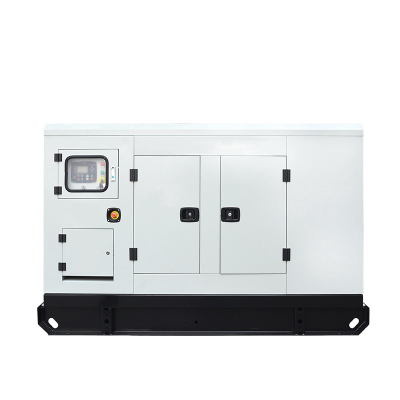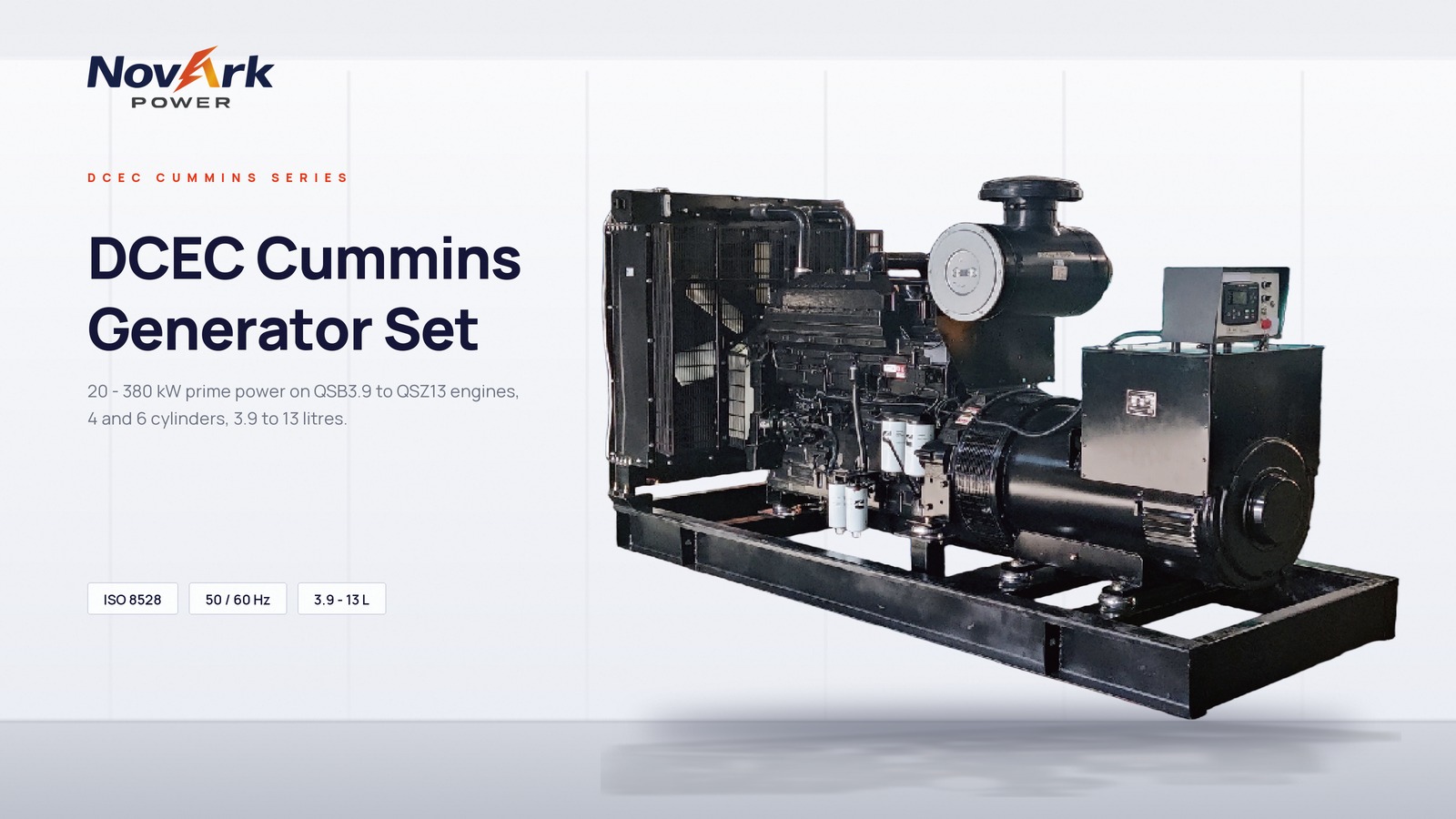
DCEC Cummins powered · 20 - 380 kW
DCEC Cummins Series Diesel Generator Set from 20 kW to 380 kW
The DCEC series covers the Dongfeng Cummins B, C and L platforms in one catalogue: 3.9, 5.9, 6.7, 8.9 and 13 litre engines, four and six cylinders, and 20 kW to 380 kW of prime power. A 20 kW telecom set and a 380 kW plant standby can therefore be bought, commissioned and kept running under one spares policy and one service contact — see the full Cummins diesel generator range.
The engines are built by Dongfeng Cummins Engine Company, the joint venture between Cummins and Dongfeng Motor in Xiangyang, Hubei, which has produced the B and C series in volume since 1986. Ratings follow Cummins' own genset duty classes, with a stepped load acceptance curve and governed speed stability suited to both prime and standby work. Open frame, soundproof canopy and containerised builds are available at 50 Hz or 60 Hz.
- 20 - 380kW prime power
- 3.9 - 13litres displacement
- 4 / 6cylinders, inline
- 208g/kWh fuel from, at rated load
Why this platform
One engine family, from 25 kVA to 475 kVA
DCEC base engine
Dongfeng Cummins builds the four-cylinder QSB3.9 and the six-cylinder QSB5.9, QSB6.7, QSL8.9 and QSZ13 in Xiangyang, on the same blocks that serve the truck, marine and construction markets. Parts are available through the Cummins network in more than 190 countries, which matters more than the engine price on a set that has to run for fifteen years.
Fuel burn from 208 g/kWh
Specific consumption across the model list runs from 208 to 230 g/kWh at rated load, with the 6.7 and 8.9 litre builds at the efficient end. On a 250 kW prime rated set in the middle of that band that is roughly 54 kg per hour, so day-tank autonomy should be calculated against the load profile rather than the nameplate.
Ratings that follow the market
Model numbers follow the kVA class used in the Chinese market, while the specification columns are kW at 0.8 power factor. Both are stated on this page so an export buyer can quote either without conversion errors.
Built to ISO 3046 and ISO 8528
Ratings, governing and load acceptance follow ISO 3046 and ISO 8528 practice, referenced to -10 to 40 degrees Celsius ambient and up to 60 percent relative humidity, with derating stated for altitudes above 1000 m.
Enclosure formats
Three enclosure formats, one base engine
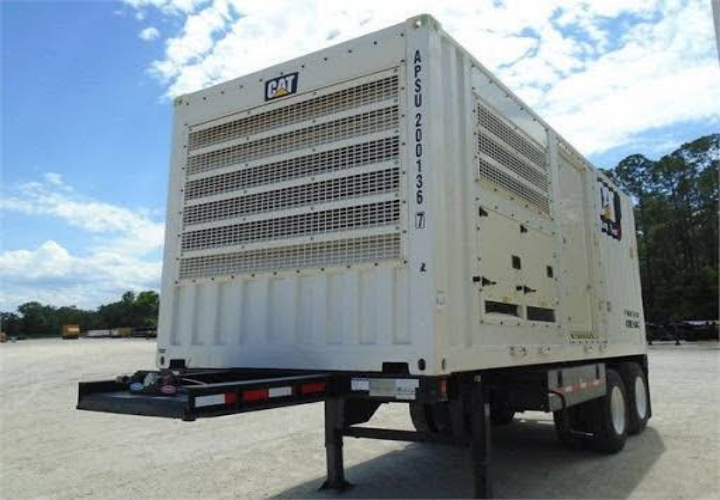
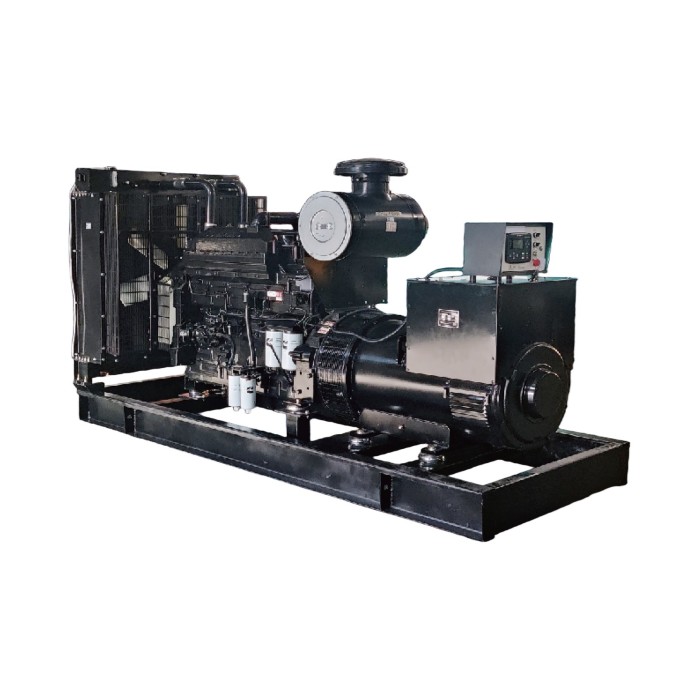
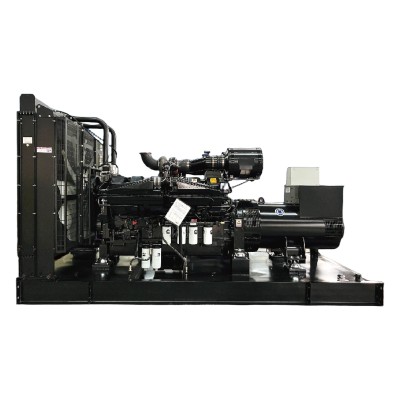
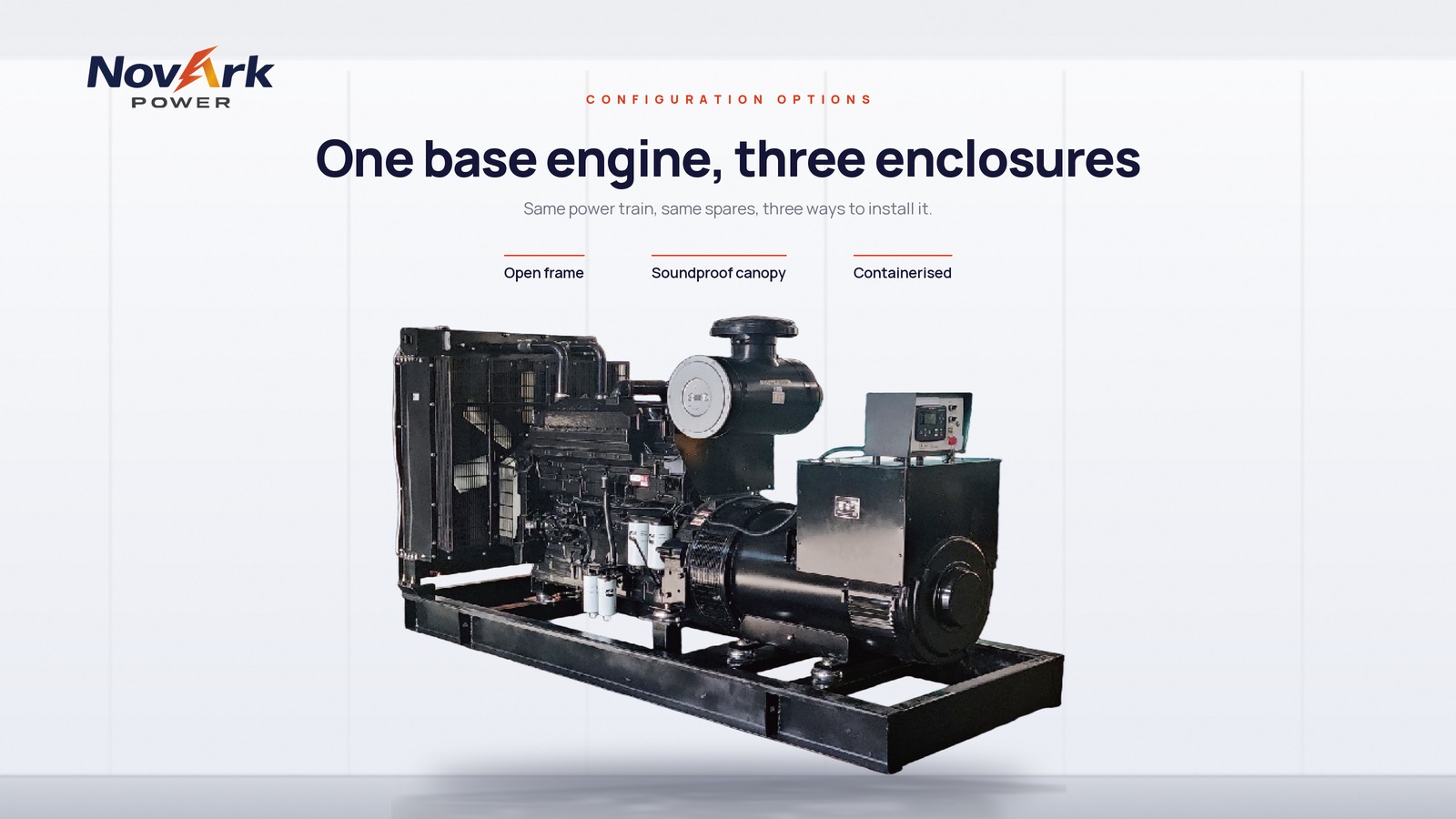
Open frame for plant rooms and containerised power stations, soundproof canopy where noise limits apply, and ISO container builds for sea freight. Engine, alternator and control panel stay the same across formats, so spare parts, wiring diagrams and operating procedures carry over from one build to the next.
Product power parameters
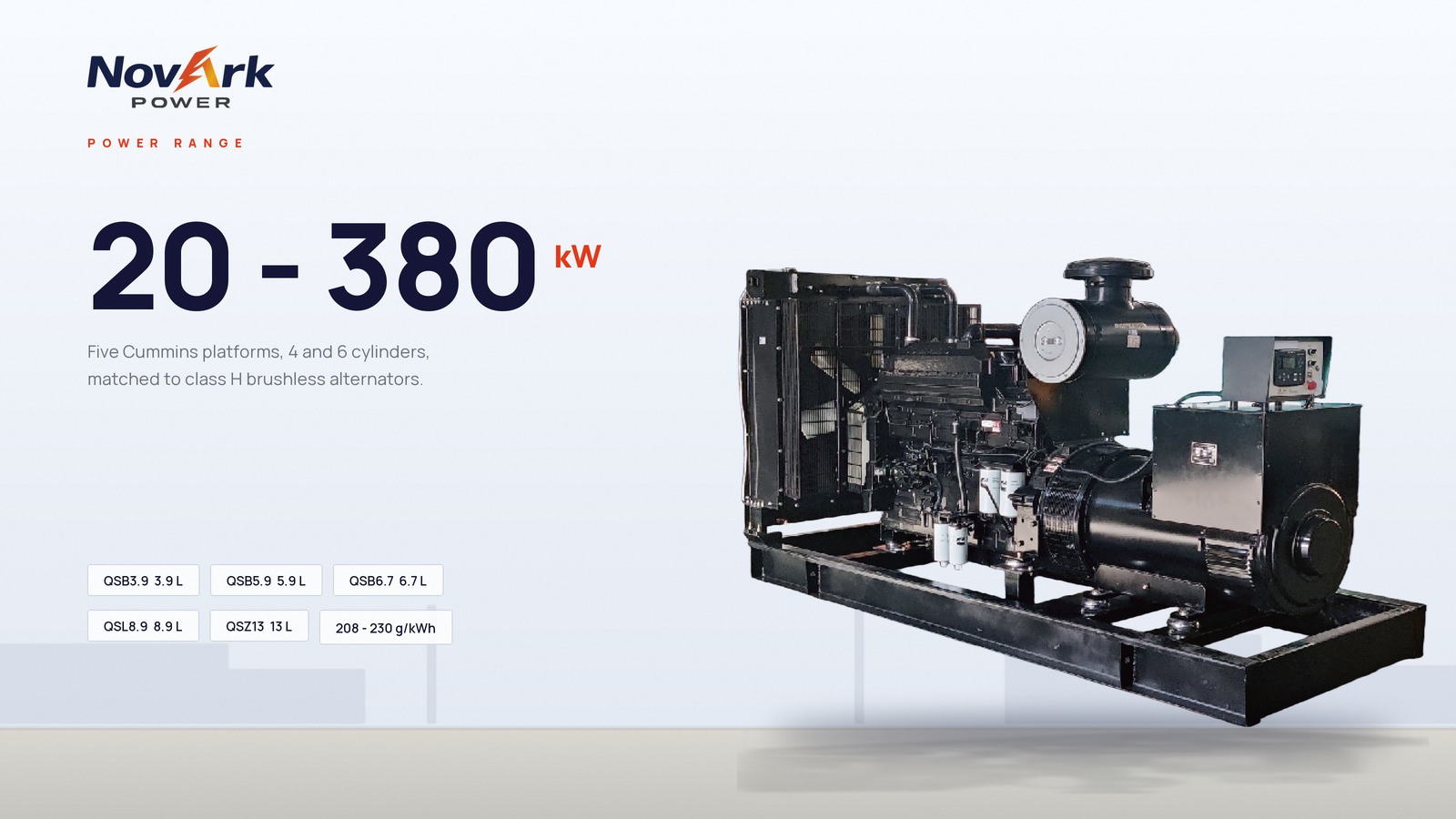
Power range by DCEC Cummins engine platform
Five engine platforms carry the range. Pick the platform by duty first, then the rating; the model list further down gives engine model, fuel consumption, dimensions and weight for every build.
Prime power figures are the lowest and highest rating offered on each platform; derating applies for altitude and ambient temperature above the reference conditions.
Complete range
DCEC Cummins series genset model list and specifications
Twenty-five listings from 20 kW to 380 kW prime power at 0.8 power factor, sorted by rating. Where a model code repeats, each row is a different engine build of the same rating — QD-150DC, for example, is offered on the QSB5.9 and the QSB6.7. Dimensions and weight refer to the open frame set without fuel tank.
Standby ratings are limited to the duration of a utility outage and are not continuous ratings. Max power is the engine's gross output at that rating, before fan and charging losses. The source catalogue quotes platform coverage from 15 kW to 400 kW; the builds listed above are the ones held on this price list, and smaller or larger ratings are quoted on request. Voltage, frequency and phase are configured per project. Capacity is verified on a load bank before handover — see how load bank testing works and the spare parts list worth stocking for a fleet of this size.
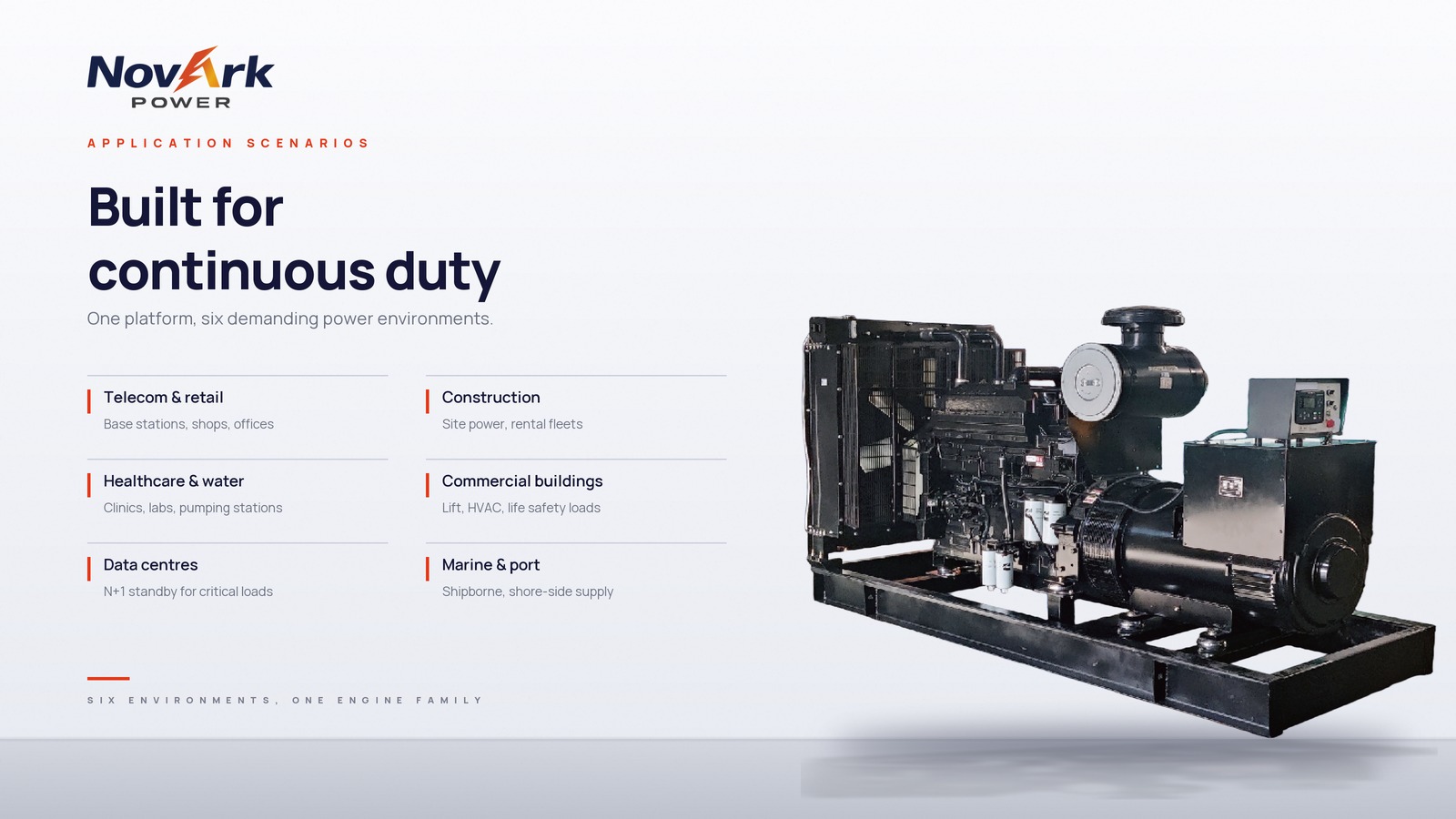
Product application scenarios
Where the DCEC Cummins series is specified
01
Telecom and retail
20 to 80 kW sets for base stations, shops and small offices, where a compact four-cylinder footprint and a single-phase option matter more than headline output.
02
Construction and rental
Site power from 48 to 180 kW on skid-mounted builds that survive transport, with a control panel rental fleets can standardise on across the whole QSB range.
03
Healthcare and water
Standby for clinics, laboratories and pumping stations between 80 and 256 kW, with automatic transfer and remote alarm reporting.
04
Commercial buildings
Standby in the 120 to 320 kW band, sized against lift, HVAC and life-safety loads rather than total connected load.
05
Data centres
N+1 standby from 200 to 380 kW on the QSL8.9 and QSZ13 builds, with 10-second start, load acceptance and paralleling for hall-level redundancy.
06
Marine and port
Shipborne auxiliary and shore-side supply, including the 13 litre six-cylinder builds used for yard power and repair berths.
Testing and handover
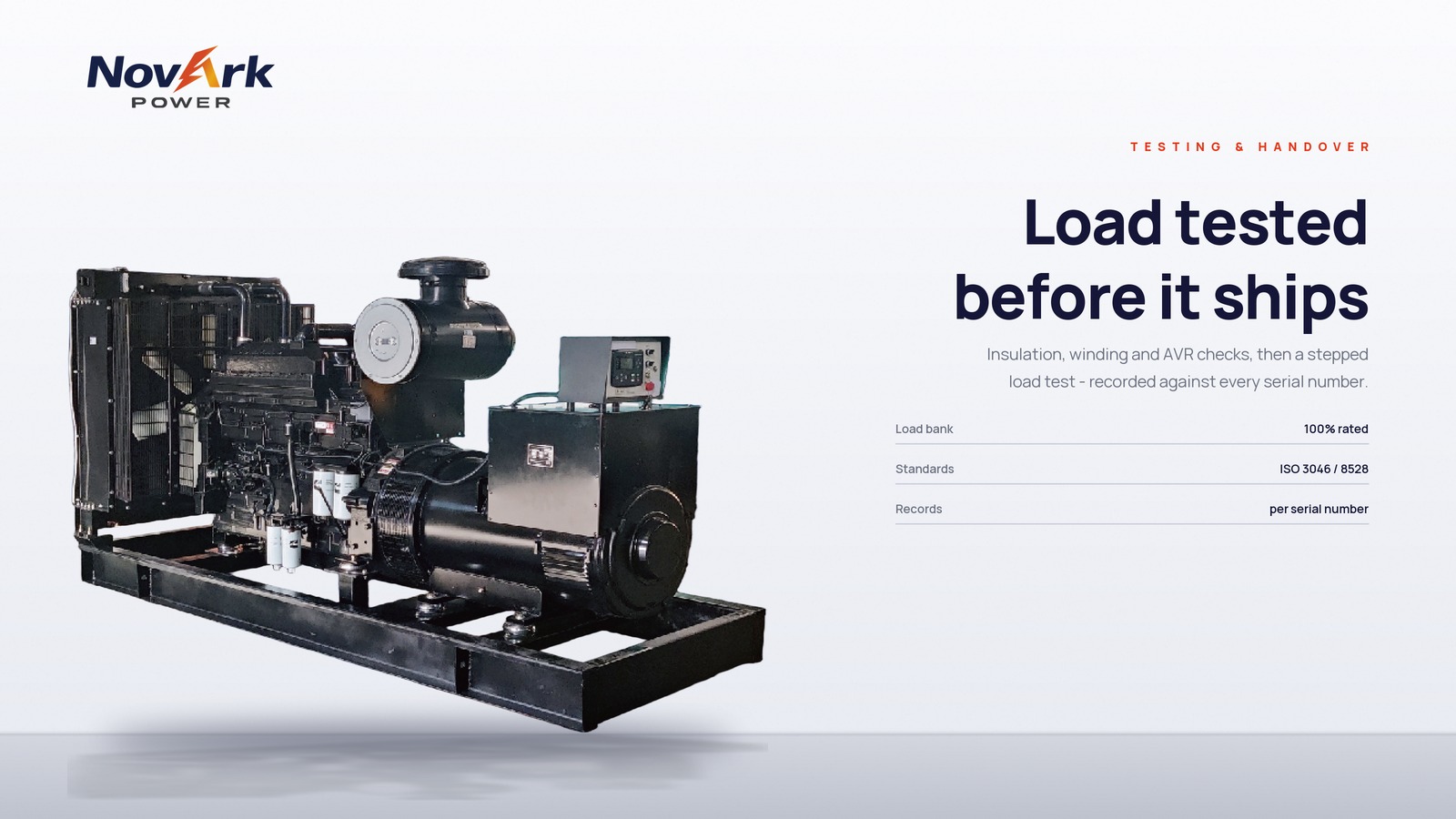
Load tested before it leaves the factory
Every set is assembled on its skid, wired to the control panel and run on a load bank before shipment. Insulation resistance and winding checks, governor and AVR setting, safety shutdown verification and a stepped load test are recorded against the serial number, and the test sheet travels with the unit.
Where a project requires it, third-party witness testing, a documented fuel consumption curve and a site acceptance procedure are agreed in the contract.
Selection questions
Choosing the right rating
Why do the model names not match the kW figures?
The QD number follows the kVA class used in the Chinese market, while the specification columns are kW at 0.8 power factor. QD-250DC is therefore a 250 kVA class set, rated 200 kW prime and 220 kW standby. For export enquiries it is safer to quote the kW figure and the required voltage.
Why does the same model code appear twice?
Because the rating is offered on two engine builds. QD-100DC is listed on the 3.9 litre QSB3.9-G39 and the 5.9 litre QSB5.9-G2; QD-125DC on the QSB5.9-G3 and G31; QD-150DC on the QSB5.9-G33 and the QSB6.7-G3; QD-225DC on the QSB6.7-G31 and the QSL8.9-G3; QD-250DC on the QSL8.9-G4 and G34. Weight and footprint differ, so compare engine model, weight and dimensions before specifying.
Which build should a 180 kW project use?
The choice sits between the 6.7 litre QSB6.7-G31 at 1700 kg and the 8.9 litre QSL8.9-G3 at 2000 kg. The 6.7 litre is the shorter and lighter of the two and fits a tighter plant room; the 8.9 litre runs the same 180 kW with more displacement, so it holds a high continuous load with less stress on the engine. The duty cycle, not the rating, should drive the decision, and the max power column shows the headroom each engine has over the set rating.
Need a specific rating, voltage or enclosure?
Send the site conditions and load profile. We will confirm the rating from this range, or size a custom build around the same DCEC engine.
Browse Cummins generator sets