Winter Maintenance for Diesel Generators: Operating Below Minus 20 Degrees
Winter Maintenance for Diesel Generators: Operating Below Minus 20 Degrees
Cold weather changes three systems at once: diesel stops flowing, battery capacity falls by up to half, and oil thickens. Here is what to change before the first cold.
What You Will Learn
What Actually Changes at Low Temperature
Cold weather does not simply make a generator harder to start. It changes three fluid and electrical systems at the same time, and each one has a different failure mode. Understanding which is which is what turns a winter checklist from a list of guesses into a list of measures.
The fuel changes state. Diesel contains waxes that begin to crystallise as the temperature falls. The temperature at which they start to cloud the fuel is the cloud point; the temperature at which the fuel stops flowing altogether is the pour point. Between those two numbers a diesel engine may run but will clog its filters, and below the pour point it will not run at all.
The battery loses capacity. A lead-acid battery that delivers 100 percent of its rated capacity at 25 °C delivers roughly half of it at minus 18 °C, and less below that. At the same time, the engine needs more cranking current, because cold oil is thicker and compression is harder to achieve. The battery is therefore asked to give more while it has less to give.
The oil thickens. Engine oil viscosity rises sharply as temperature falls. Thick oil is slow to reach the bearings and the turbocharger on a cold start, which is exactly when the engine is least protected. The first seconds after a cold start account for a disproportionate share of total engine wear.
Most winter starting failures are one of those three, and most of them are predictable a month in advance. The rest of this guide works through each in turn, then covers the enclosure and operating rules that decide whether a cold-climate installation is genuinely reliable.
Fuel: The Single Most Common Winter Failure
If a diesel generator starts in summer and refuses in winter, fuel is the first thing to check, and it is the cause more often than any other single item.
Use winter-grade diesel, and confirm the grade rather than assuming it. Fuel suppliers change their specification by season and by region, and the changeover date is not the same everywhere. What matters is that the cloud point of the fuel in your tank is below the lowest expected ambient temperature at the site - not below today's temperature, but below the coldest night the installation is expected to see.
Beware of last season's fuel. A tank filled in September with summer-grade diesel will still contain summer-grade diesel in January. Wax does not evaporate. The practical rule is to draw the tank down before the cold season and refill with winter-grade fuel, rather than topping up on top of old stock.
Water is worse in winter than in summer. Any water in the fuel or the tank settles and freezes, and ice blocks filters and lines. Condensation is the usual source: a partly empty tank breathes as it warms and cools, and the moisture in that air condenses on the cold tank wall. Keeping the tank fuller reduces the air space and therefore the condensation, and draining the water separator becomes a daily check rather than a weekly one in cold weather.
Consider a fuel heater or a heated filter. On installations that must run at very low temperatures, a fuel line heater, a heated filter head or a tank immersion heater keeps the fuel above its cloud point. This is normal equipment in cold-climate installations and unusual enough elsewhere that it is often forgotten at the specification stage.
Change the fuel filters before winter, not during it. A filter that is near the end of its life will block sooner when the fuel is cold and viscous. Replacing filters in advance is cheap; replacing them at minus 25 °C, in the dark, having already failed to start, is not.
Battery and Starting: Where Capacity Goes
The battery is the second most common cause of winter starting failure, and the arithmetic is unforgiving.
Capacity falls as temperature falls, and demand rises. A battery rated at 100 percent at 25 °C gives roughly 80 percent at 0 °C, about 65 percent at minus 10 °C and roughly half at minus 18 °C. Meanwhile, cranking a cold engine requires more current than cranking a warm one. The result is a battery that passes every test in October and fails in January.
Test the battery under load, not for voltage. A battery reading 12.6 volts can still collapse under cranking load. A load test is the only meaningful check, and in a cold climate it belongs in the autumn service, not in the winter emergency.
Charge it properly, and keep it charged. A standby set does not charge its own battery by running. Battery charge state should be checked weekly in winter rather than monthly, and a maintenance charger is a reasonable investment on a set that is expected to start at short notice in cold weather.
Warm the battery if you can, and keep it warm if you cannot. Battery heaters and insulated battery boxes exist for this reason. A battery at minus 10 °C performs noticeably better than one at minus 25 °C, and the cost of keeping it warm is trivial against the cost of a failed start.
Use starting aids with care. Ether-based starting fluid will get an engine running, and it will also damage an engine that is used to it repeatedly, particularly one with a pre-heat system. If a set needs starting fluid every time, the installation has a problem that the fluid is hiding - normally fuel grade, battery condition or a missing block heater.
A block heater changes the whole picture. An engine coolant heater keeps the block warm while the set is on standby, so the first start is closer to a warm start. On a cold-climate standby installation this is the single most effective measure available, and it is usually specified at the outset or not at all.
Lubrication and Coolant
Both fluids are easy to get wrong, and both failures are expensive.
Oil viscosity grade matters more in winter than at any other time. An oil that is correct in summer may be too thick at minus 25 °C to flow to the bearings quickly. The engine manufacturer's manual lists the acceptable viscosity grades at each ambient temperature range; the winter grade is the one to use in winter, and it should be changed before the cold season rather than after the first hard start.
Use the manufacturer's oil, or the equivalent specification. A thinner oil is not automatically better. What matters is that the grade matches both the ambient temperature and the engine's design requirement, which is why the manual governs rather than a general rule.
Coolant concentration is not guesswork. The antifreeze concentration sets the freezing point, and the mix changes with the concentration - too little protection and the block cracks, and beyond a certain concentration the protection actually decreases. A refractometer check takes seconds and is the only way to know what is actually in the system rather than what was put in three years ago.
Coolant degrades and should be replaced on schedule. Inhibitors deplete over time, and a system that was protected when it was filled may not be protected now. If the coolant has not been changed within the manufacturer's interval, winter is the wrong time to discover it.
Check for leaks before the cold arrives. A weep that is a nuisance in summer becomes a failure in winter, because the leak path widens as seals contract and the fluid that leaks is more damaging when it freezes. Hoses, clamps, the radiator core and the water pump seal are the usual places to look.
The Enclosure and the Installation
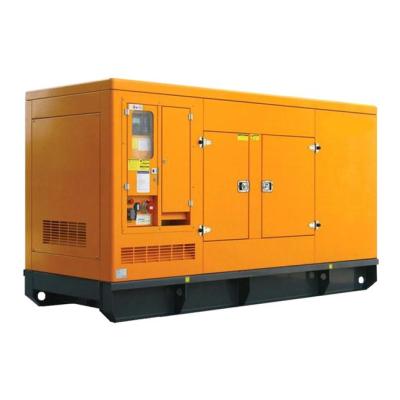
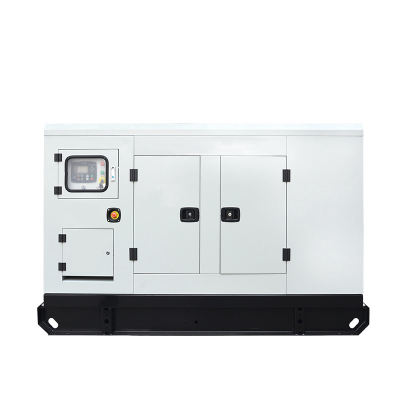
An enclosure protects the set from weather, and it can also trap the conditions that make cold starting harder. The balance between weather protection and ventilation has to be deliberate.
Snow and ice block air paths. The air intake and the radiator discharge are the two openings that matter most, and both can be buried by drifting snow or blocked by ice forming on the louvers. In locations with heavy snowfall, the intake and discharge should be raised or ducted away from the snow line, and the site should have a routine for clearing them.
Condensation is a cold-climate problem, not only a humid-climate one. Air inside an enclosure warms during a run and cools afterwards; the moisture in it condenses on cold metal, including electrical components. Enclosure heaters and correct ventilation both address this, and neither works if the enclosure is sealed so tightly that the moist air cannot leave.
Cold-soaked fuel and batteries are the enclosure's real weakness. An enclosure that is unheated offers no advantage to the battery or the fuel system. If the installation is expected to start at very low temperatures, the enclosure should be insulated or heated - and the decision belongs at the design stage, because retrofitting heat into a canopy is far more expensive than specifying it.
Verify the load capacity of the foundation and the mounting. Frozen ground, ice and snow affect how the set sits and how the exhaust and cable entries are routed. On a fixed installation this is a commissioning item, and on a mobile or trailer-mounted set it is a daily check.
Keep the exhaust clear of snow. A blocked exhaust on a set that is about to start is both a performance and a safety issue. Debris and snow clearance should be part of the start-up procedure in winter, not an occasional maintenance task.
Cold-Start and Operating Rules
The procedure used in the first minutes of a cold start decides more about engine life than most of the maintenance calendar.
Pre-heat before cranking, and give it time. Where a block heater or a pre-heat system is fitted, let it do its work rather than starting immediately. On engines with a pre-heat function controlled by the panel, waiting for the indication to complete is not optional.
Start, then load the set reasonably soon. A diesel engine that starts and then idles for a long time at no load warms slowly, and cold idle is the least favourable condition for combustion. Where the installation allows it, apply load in stages once oil pressure and temperature are established. This is also the point at which wet stacking begins to form, which is the subject of the separate article on light-load operation.
Avoid short runs. Starting a cold engine to check it works and then shutting it down does more damage than not running it. If the set is started, it should run long enough to reach operating temperature.
Log the cold starts. The number of cold starts, the ambient temperature and whether the set started first attempt are worth recording. Two failed first attempts at the same temperature is a pattern, and a pattern can be investigated in a workshop; a single failure in the field cannot.
Follow the manufacturer's cold weather procedure for your engine. Different engines have different limits and different aids. The general principles in this article are the framework; the manual for the specific model sets the numbers and the procedures.
A Working Winter Checklist
Arranged in the order in which the items should be addressed before the first cold night.
- Fuel: confirm the cloud point of the fuel in the tank is below the site's lowest expected temperature;
draw down and refill with winter grade rather than topping up old stock.
- Water: drain the water separator daily; keep the tank as full as practical to reduce condensation.
- Filters: replace fuel filters before the season, not during it.
- Battery: load test; check charge state weekly; insulate or heat the battery where the climate requires.
- Oil: change to the winter viscosity grade listed in the engine manual.
- Coolant: check concentration with a refractometer; replace if the interval has passed; inspect for weeps.
- Heating: confirm the block heater and, where fitted, the fuel heater actually work - test them in
autumn, when a fault can still be fixed comfortably.
- Enclosure: clear intake, discharge and exhaust paths of snow and ice; check that ventilation and
enclosure heaters are functioning.
- Procedure: confirm the panel start sequence, the pre-heat requirement and who is responsible for
clearing the installation after snow.
- Records: log cold starts with temperature and outcome.
Most of that list takes an afternoon in October. Skipping it costs a morning in January, at the worst possible moment, on the coldest day of the year - which is precisely when a standby set is expected to work.
If a set has to be specified for an installation that will see severe winter conditions, the cold-weather provisions are easier to build in than to add afterwards: heated fuel system, block heater, insulated enclosure, high cold-cranking battery capacity and a control panel configured for pre-heat. Our engineers confirm those against the site's temperature range and altitude for each project.
FAQ
Why does my diesel generator start in summer but not in winter?
The three usual causes, in order of frequency, are winter fuel grade, battery capacity and cold oil viscosity. Summer-grade diesel waxes and blocks filters when cold, battery capacity drops by up to half at minus 18 °C, and thick oil makes the engine harder to crank. Fuel is the most common of the three.
At what temperature does diesel stop flowing?
It depends on the grade. Diesel contains waxes that start to crystallise at the cloud point and stop flowing at the pour point, and those temperatures differ by grade and by region. What matters practically is that the cloud point of the fuel in your tank is below the lowest temperature the site will see.
Should I use starting fluid on a cold diesel engine?
It will start the engine, and repeated use will damage it, particularly on engines with a pre-heat system. If a set needs starting fluid routinely, the underlying problem is fuel grade, battery condition or a missing block heater, and that is what should be fixed.
How much battery capacity is lost in cold weather?
Roughly 20 percent at 0 °C, about 35 percent at minus 10 °C and around half at minus 18 °C, measured against capacity at 25 °C. At the same time the engine needs more cranking current, so the effective margin is smaller than those figures suggest.
Do I need a block heater?
On a standby installation that must start reliably below about minus 10 °C, a block heater is the single most effective measure available. It keeps the engine closer to operating temperature, so the first start is closer to a warm start. It is far cheaper to specify than to retrofit.
Talk to Our Engineers About Your Project
Roughly 20 percent at 0 °C, about 35 percent at minus 10 °C and around half at minus 18 °C, measured against capacity at 25 °C. At the same time the engine needs more cranking current, so the effective margin is smaller than those figures suggest.
This article is for informational purposes only. Specifications and availability may vary by region. Please contact NovArk Power for a confirmed quotation tailored to your project requirements.