How to Choose a Diesel Generator Set
How to Choose a Diesel Generator Set:
A Product Comparison & Selection Guide
— With a Focus on SDEC (Shanghai Diesel Engine Co.)
Buying a diesel genset is scary for two reasons: the sales rep quotes "standby 550 kW" as if it were "prime 550 kW" — cheap on paper, but trips the breaker under real load. Or you buy "top-tier Chinese," only to receive a rebadged engine, an aluminum-wire alternator, and a no-name controller — three years later, no spare parts exist.
BUYER'S GUIDE SDEC FOCUS CHINESE BRANDS1. Power Rating Reality Check — PRP / ESP / COP
Per GB/T 2820.1 / ISO 8528-1, every genset nameplate must distinguish at least three power ratings:
- COP — Continuous Operating Power: Constant load 24/7, no overload capability. Used for base-load power stations or island grids.
- PRP — Prime Power: Variable load for prolonged operation. May deliver 10% overload for 1h within any 12h. This is the benchmark for factories, construction sites, and regular backup.
- ESP — Emergency Standby Power: Only when mains fails. Max 500h/year, max 1h per event. Numerically ≈ PRP × 1.1.
⚠️ The Classic Trap: A vendor quotes "550 kW standby" but the real prime rating is only 500 kW. If you load it to 550 kW continuously, expect overheating, carbon buildup, and cylinder scoring within months.
Rule-of-Thumb Margin Factors (400V / 50Hz)
- Pure standby (mains is primary): Calculated load ×
1.15 – 1.25 - Prime / frequent auto-start: Calculated load ×
1.25 – 1.5 - Motor / compressor / pump loads (startup current 3–7×): size for the largest single motor × 2–3× transient margin, or add soft-starters
- Altitude > 1000 m or ambient > 40 °C: apply engine de-rating curve — typically 3–5% per step
Quick formula: Determine "standby or prime" → calculate load + starting surge → apply margin → adjust for environment → arrive at required PRP rating.
2. Top Chinese Engine Brands Compared
We put the four most-specified domestic brands side-by-side. All are Tier-1 in China; the differences are character and ecosystem, not raw quality.
| Brand | Core Power Range | Personality | Best For | Watch Out |
|---|---|---|---|---|
| SDEC | 40 – 2000 kW (SC4H ~ 12VK) | Legacy prime-mover, compact, cheap spares, stable start/stop | Factory backup, commercial buildings, hospitals, mid-size IDC, municipal projects | Very-large-power (>1500 kW) range thinner than Cummins / MTU |
| Yuchai YC | 25 – 1000 kW | Fuel-sipping, quiet, fast emission upgrades, fuel-tolerant | Southern commercial, strict noise/emission zones | Slightly weaker cold-start reputation in extreme north |
| Weichai WP | 25 – 300 kW (main push), up to 1000 kW | Rugged, heavy-duty, aggressive pricing | Construction sites, mines, 24/7 full-load running | Market flooded with "Weifang rebadge Weichai" — verify main-plant nameplate |
| Cummins (Dongfeng / Chongqing) | 25 – 2400 kW | Precise electronic control, high resale, global parts | Finance, Tier-III+ data centers, export projects | 25–35% pricier than pure domestic; sensitive to fuel sulfur (≤15 ppm) |
One-line positioning: Want international pedigree & resale → Cummins. Want maximum fuel economy & quiet → Yuchai. Want brute-force durability on a jobsite → Weichai. Want "legacy OEM DNA + compact footprint + easy self-maintenance" → SDEC is the most balanced Chinese answer.
Why SDEC Specifically
- Long genset integration history: engine + alternator + controller matching maturity is above average for the price tier.
- Compact footprint: same power rating occupies 10–15% less floor area than comparable Weichai / Yuchai packages.
- Service network: 1500+ service stations (OEM + authorized) nationwide; oil change interval 500–1000 h; filters / gaskets / injectors are commodity-priced.
- Full-range common-rail: all 4-valve, turbo-intercooled, BSFC 192–210 g/kWh, soundproof canopy ≤72 dB(A) @ 1 m, supports SmartGen / SDEC controller + ATS + cloud + parallel operation.
3. SDEC Product Line at a Glance (50Hz / 400V)
All models below are genuine "Shanghai Diesel Engine Co., Ltd." factory units, model prefix SC. Beware "SDEC-powered retrofit" or "Weifang SDEC" fakes.
| Power Band | Engine Family | Specs | Typical Use | Example (Prime / Standby) |
|---|---|---|---|---|
| 40 – 150 kW | SC4H / SC7H | Inline-4 / Inline-6, 4.3 – 6.5 L | Shops, telecom base stations, small factories, rural backup | FL50SC (SC4H95D2) — 40 / 44 kW |
| 160 – 250 kW | SC8D / SC9D | Inline-6, 8.27 – 8.82 L | Mid-size commercial, hotels, plant backup | SC8D280D2 — 160 / 204 kW |
| 200 – 400 kW | SC13G / SC15G | Inline-6, 12.9 – 14.2 L, 4V common-rail | Hospitals, electronics plants, edge data rooms | SC15G500D2 — 373 / 400 kW |
| 400 – 800 kW | SC25G / SC27G / SC33W | V12 / Inline-6, 25.8 – 32.8 L | Commercial complexes, mines, chemical plants | SC27G830D2 — 610 / 860 kW |
| 800 – 1250 kW | 16XTAA38-G3 | V16 heavy-duty | Data center N+1, large plant parallel | — 800 / 1100 kW |
| 1300 – 2000 kW | 6WTA35 / 12VK / 16VK | V12 / V16, 57 – 76 L | Power-plant emergency, oilfields, large parallel stations | — 1300 / 2000 kW |
Nameplate trick: PRP and ESP must be printed side-by-side. ESP ≈ PRP × 1.1. If only one number is shown, treat it as ESP and divide by 1.1 to get the real prime rating.
4. The "Three-Layer Configuration" Method
Layer 1 — Power (Engine)
Insist on genuine SDEC factory nameplate, model starting with SC. Reject "SDEC-powered" rebuilds.
Layer 2 — Power Generation (Alternator)
Use a brushless synchronous alternator with 100% copper windings — Stamford, Leroy-Somer, Engga, Faraday, or Lanzhou Electric are all acceptable. H-class insulation. For UPS / SMT / lab loads, specify AVR + G3-class power quality.
Layer 3 — Control & Structure
- Open-frame jobsite: mechanical governor + manual start/stop
- Plant / property management: electronic governor + SmartGen 6110 / SDEC screen + ATS
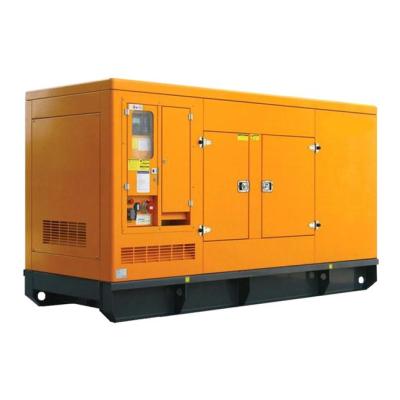
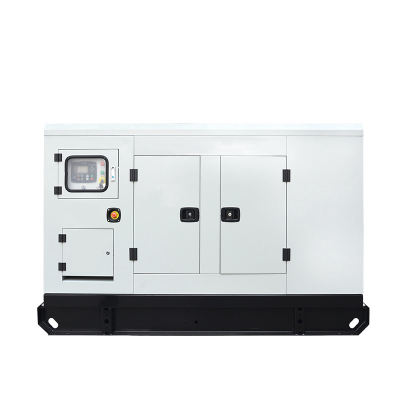
- Hospital / hotel / residential: soundproof canopy (≤75 dB @ 7 m) + jacket water heater + 4-protection relay
- Mobile municipal work: trailer-mounted + weatherproof enclosure
- Data center / large plant: parallel cabinet + N+1 + remote APP + 10-second load acceptance
5. Pick Your Model by Scenario (Ready-to-Use)
| Scenario | Recommended SDEC Package | Key Notes |
|---|---|---|
| 30–80 kW retail / rural backup | FL50SC / FL75SC (SC4H95/115D2) + open frame or small canopy | 100% copper brushless; turnkey ≈ USD 60–100 / kW |
| 200 kW factory backup (with air compressor) | SC7H230D2 or SC8D280D2 + ATS | Leave 30% margin for motor starting surge |
| 400 kW hospital / hotel | SC15G500D2 soundproof + SmartGen screen + jacket heater | G2+ class; ≤75 dB @ 7 m |
| 800 kW commercial complex | SC27G830D2 × 2 parallel (N+1) or single 16XTAA38-G3 | Load sharing + auto-sync |
| 1200 kW edge data hall | 16XTAA38-G3 × 2 parallel | G3 alternator, load sharing, remote O&M |
6. Six Procurement Pitfalls to Avoid
- Separate PRP and ESP in the contract. Reject vague "standby XXX kW" language. If a vendor won't commit to both numbers in writing, walk away.
- Verify engine serial number. Every genuine SDEC engine can be verified via the official SDEC website or 400 hotline. Write alternator brand, copper purity, and insulation class into the contract.
- Sign a 72-hour load acceptance report: voltage variation, frequency recovery, 50% step-load speed dip, oil pressure curve. No report, no final payment.
- Specify emission compliance. Urban / industrial-park projects require China-III / China-IV + SCR or DPF. Do not accept off-road China-II being sold as China-IV.
- Clarify the price basis. Always confirm whether the quote is "open-frame bare engine" or "turnkey" (canopy + ATS + fuel tank + exhaust + installation). Tier-1 Chinese packages typically land at
USD 60 – 140 / kW. - Put after-sales SLA in writing: on-site response time in urban areas, spare-parts lead time, whether first service is free.
7. One-Line Decision Summary
If you have a domestic budget, want OEM heritage, a compact engine room, and the ability to maintain it yourself → go with an SDEC SC-series + 100% copper brushless alternator + electronic governor / ATS. Size it at "PRP × 1.25 – 1.3" (add more for inductive loads) and you will almost never be wrong.
Only when you step into Tier-III+ data centers, core financial trading, or export-certified projects should you bring Cummins or MTU into the comparison.
If you share your project's load schedule (equipment kW + motor-start details + altitude / min temperature + noise-emission constraints), I can pin down the exact SDEC model and a ballpark turnkey price range for you.