




Diesel or Gas Generator: Which Really Costs Less to Run?
Ask which generator costs less to run and the answer usually starts with a fuel price. That is the wrong place to start. What matters is the cost of one kilowatt-hour at the site, and four things build it: the delivered fuel price, fuel burned per kWh, the cost of keeping the set healthy, and the hours it actually runs.

Two fuels, two supply chains
Diesel arrives by truck and sits in a tank. Natural gas arrives through a pipeline, or it does not arrive at all. Most of the cost difference follows from that. A diesel set is a self-contained power station: tank, bunding, a delivery route and fuel-quality checks, and in exchange it runs anywhere a truck can reach. A gas set is tied to infrastructure - a pipeline with enough pressure and volume, or a CNG or LNG arrangement with storage, vaporisation and pressure regulation bolted on. Whichever it is, compare the price the project pays at the point of use - not a retail diesel figure against a wholesale gas tariff.
What counts as a running cost
Four lines belong in the calculation, and most quotations only address the first:
- Fuel - delivered price multiplied by consumption per kWh, across the real load profile
- Maintenance - filters, oil, ignition or injection parts, labour, travel and overhaul reserve
- Fuel logistics - tank and bunding, gas connection or CNG/LNG handling, storage losses
- Downtime - the cost of the hours the site did not run, which no fuel price offsets
Fuel per kWh, not litres per hour
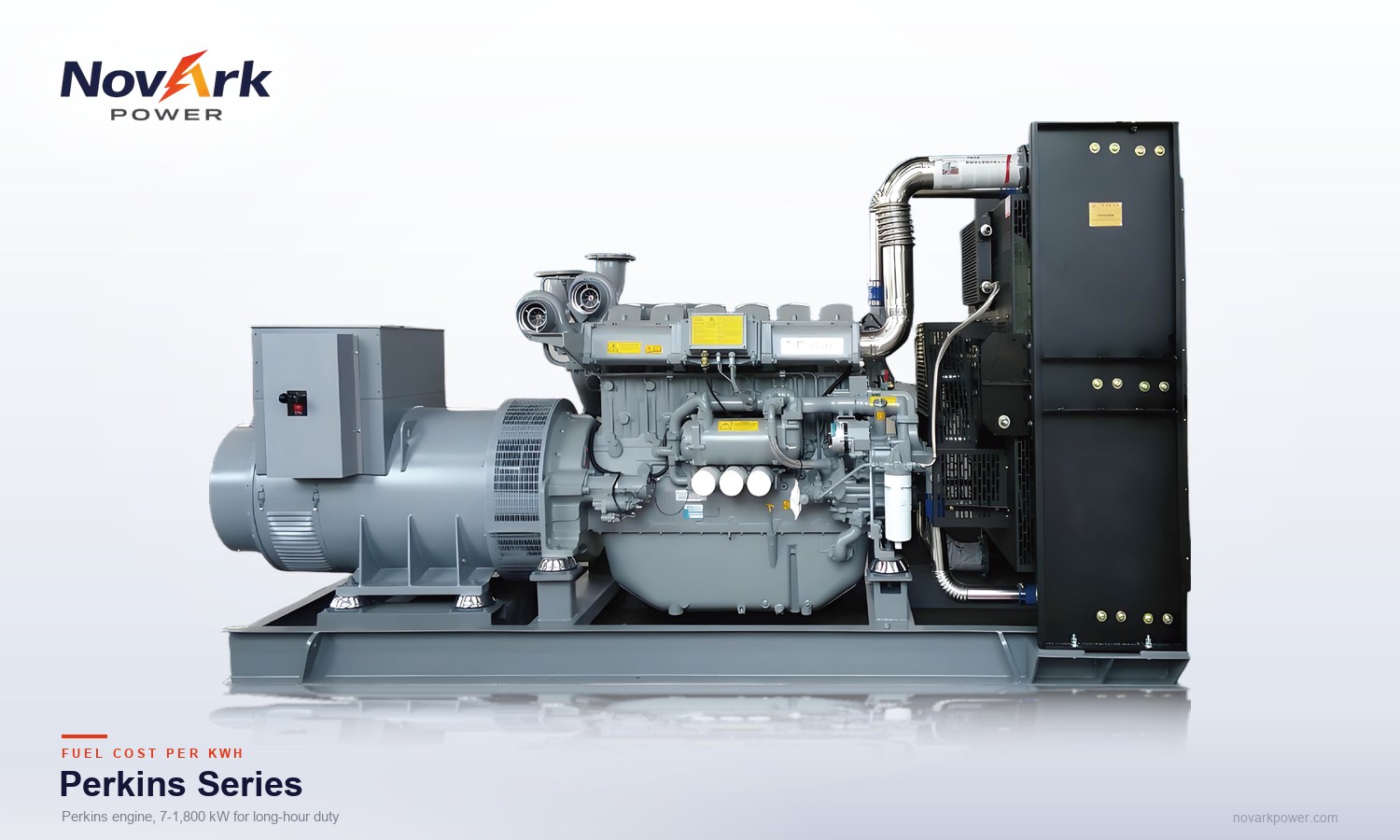
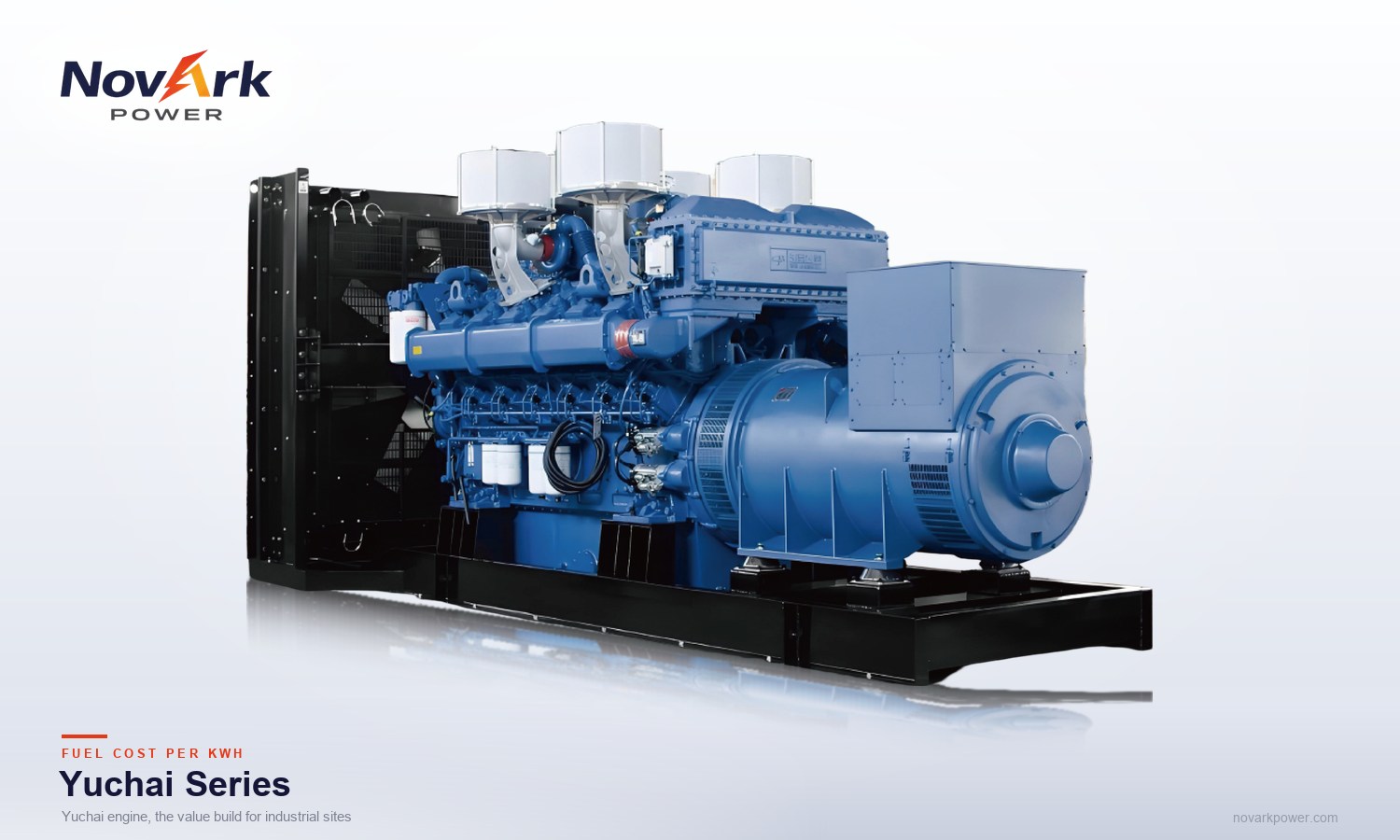
Litres per hour tells you how big the tank needs to be, not what the electricity costs. The useful metric is specific consumption: fuel burned per kilowatt-hour. A modern diesel set typically lands between 0.23 and 0.26 litres per kWh at full load, roughly 190 to 215 grams of fuel per kWh. A gas engine at about 40% electrical efficiency burns roughly 0.25 to 0.28 cubic metres of gas per kWh.
Ask for consumption at 25%, 50%, 75% and 100% load. Part-load efficiency is where oversized generators lose the money they saved on the purchase order; our fuel consumption guide charts it across the common ratings.
Fuel cost per kWh = fuel consumed per kWh x delivered fuel price. Everything else here is a refinement of that line.
Diesel and gas side by side
| Cost factor | Diesel generator | Natural gas generator |
|---|---|---|
| Fuel price | Local diesel market plus delivery distance | Competitive on cheap, reliable pipeline gas; delivered CNG or LNG is not |
| Consumption | 0.23-0.26 L/kWh at full load, worse at part load | 0.25-0.28 m3/kWh at full load, sensitive to gas quality |
| Supply | Tank, bunding and deliveries; fuel can be stockpiled | Pipeline preferred; off-grid gas needs storage and regulation |
| Maintenance | Oil, filters, injection and fuel-system work | Oil, filters, spark plugs and ignition, gas train and sensors |
| Best fit | Remote sites, standby duty, mobile projects | Firm pipeline gas plus long operating hours |
Maintenance follows the engine
Both technologies need scheduled service; the difference is what the service consists of. A diesel set spends its budget on oil, filters, injection components and fuel-system health, because dirty fuel is the most common cause of a diesel failure. A gas engine avoids that but adds ignition: spark plugs and leads typically want attention every 1,000 to 2,000 hours, and the gas train, valves and sensors need inspection. Neither list is automatically cheaper. Hours, load factor, local labour and parts prices and travel distance decide the annual figure.
Duty cycle decides more than fuel price
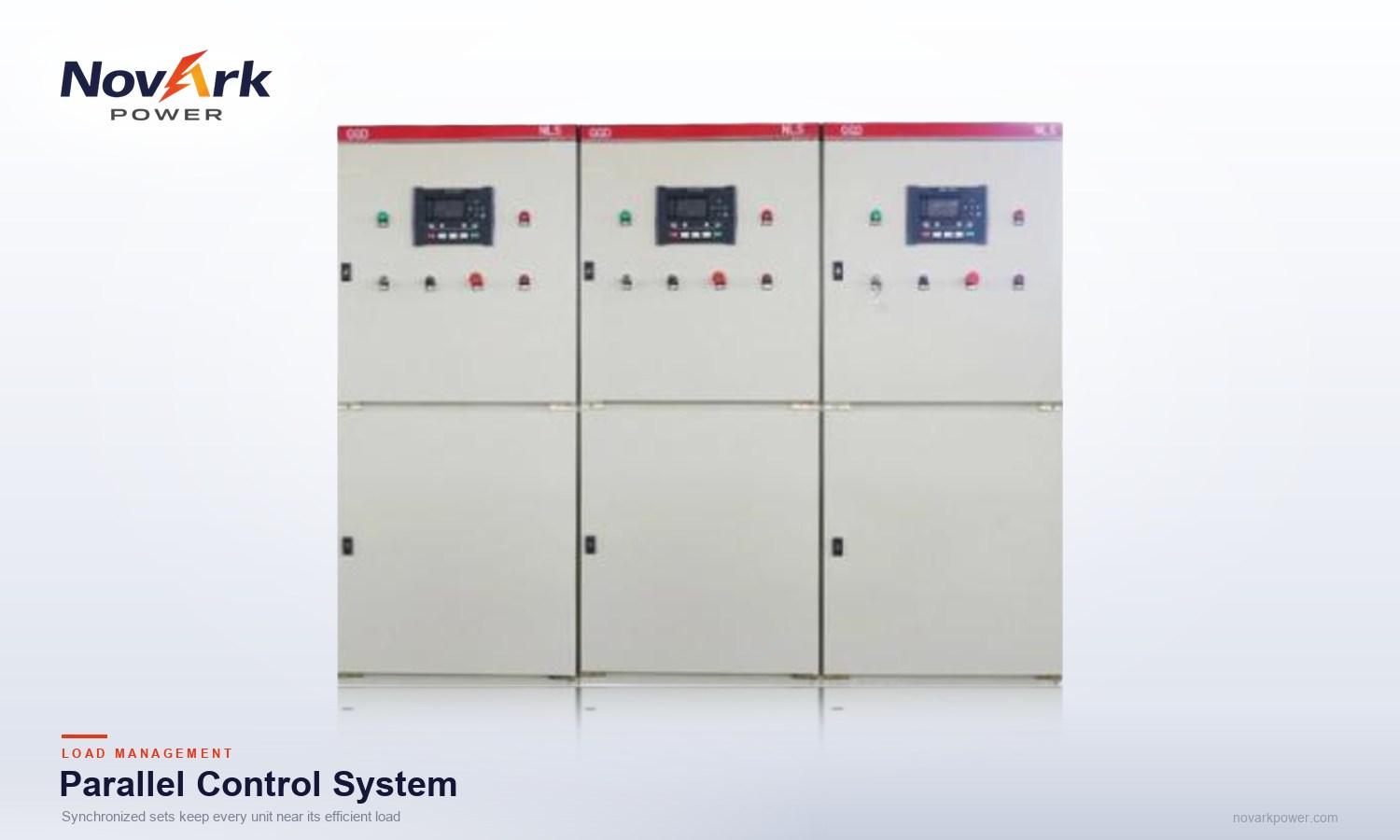
A standby set may run 50 hours a year; a prime-power set on a mine without a reliable grid may run 6,000. On standby duty fuel cost is almost irrelevant and starting reliability, fuel availability and service support decide. On long-hour duty fuel cost per kWh dominates, along with part-load efficiency, service intervals and overhaul cost. In between, load management is the lever: several smaller synchronized sets near their efficient band usually beat one large set idling at 25%.
How to calculate the annual number
- 01
Fix the load profile
Hours per year, average load, peak load and the largest motor start, used identically for both technologies.
- 02
Convert to fuel
Consumption at the actual load points, not at full load, multiplied by the delivered price at that site.
- 03
Add everything that is not fuel
Service, labour and travel, parts, overhaul reserve, tank or gas connection, storage losses and handling.
- 04
Divide by kWh delivered
Total operating cost over the period divided by electricity generated in the same period gives a levelised figure.
As an illustration only: at a delivered diesel price of 1.10 per litre and 0.24 L/kWh, fuel costs about 0.26 per kWh. At a gas tariff of 0.45 per cubic metre and 0.26 m3/kWh, fuel costs about 0.12. That gap is why the connection, compression equipment and service network must be priced before anyone declares a winner.
So which one is cheaper?
There is no universal answer, and any supplier who gives one before seeing a load profile is guessing. Gas tends to win where pipeline supply is firm, the tariff is low and the set runs thousands of hours a year. Diesel tends to win where the site is remote, fuel can be stored, hours are modest, or a gas connection needs capital the project cannot carry.
For most industrial buyers outside a gas network, the real question is which diesel generator set and operating strategy delivers the lowest cost per kWh. NovArk Power builds sets from 10 to 3,000 kVA and supplies gas generator sets where the infrastructure supports them, so the recommendation can follow the site rather than the catalogue.
Questions buyers ask
Is a gas generator always cheaper to run?
No. It is cheaper where pipeline gas is cheap and reliable and the set runs long hours. Add a connection, compression or LNG logistics and the advantage can disappear.
Does a bigger generator cost less per kWh?
Only up to a point. Efficiency improves with size, but a large set at low load burns more fuel per kWh than a correctly sized smaller one.
What should a site send for a comparison?
Load profile with hours, average and peak load, largest motor start, delivered fuel prices, and whether duty is standby or continuous.
Running the numbers for a site? Send your load profile and delivered fuel prices through our contact page and we will size the set around the hours it will actually run.
Note. Consumption and price figures here are indicative ranges used to explain the method, not quotations. Specific fuel consumption varies with engine model, load, altitude, ambient temperature and fuel quality. Final selection requires the manufacturer's data at the actual load points and a professional assessment of the site.