


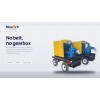
Direct drive, no belt
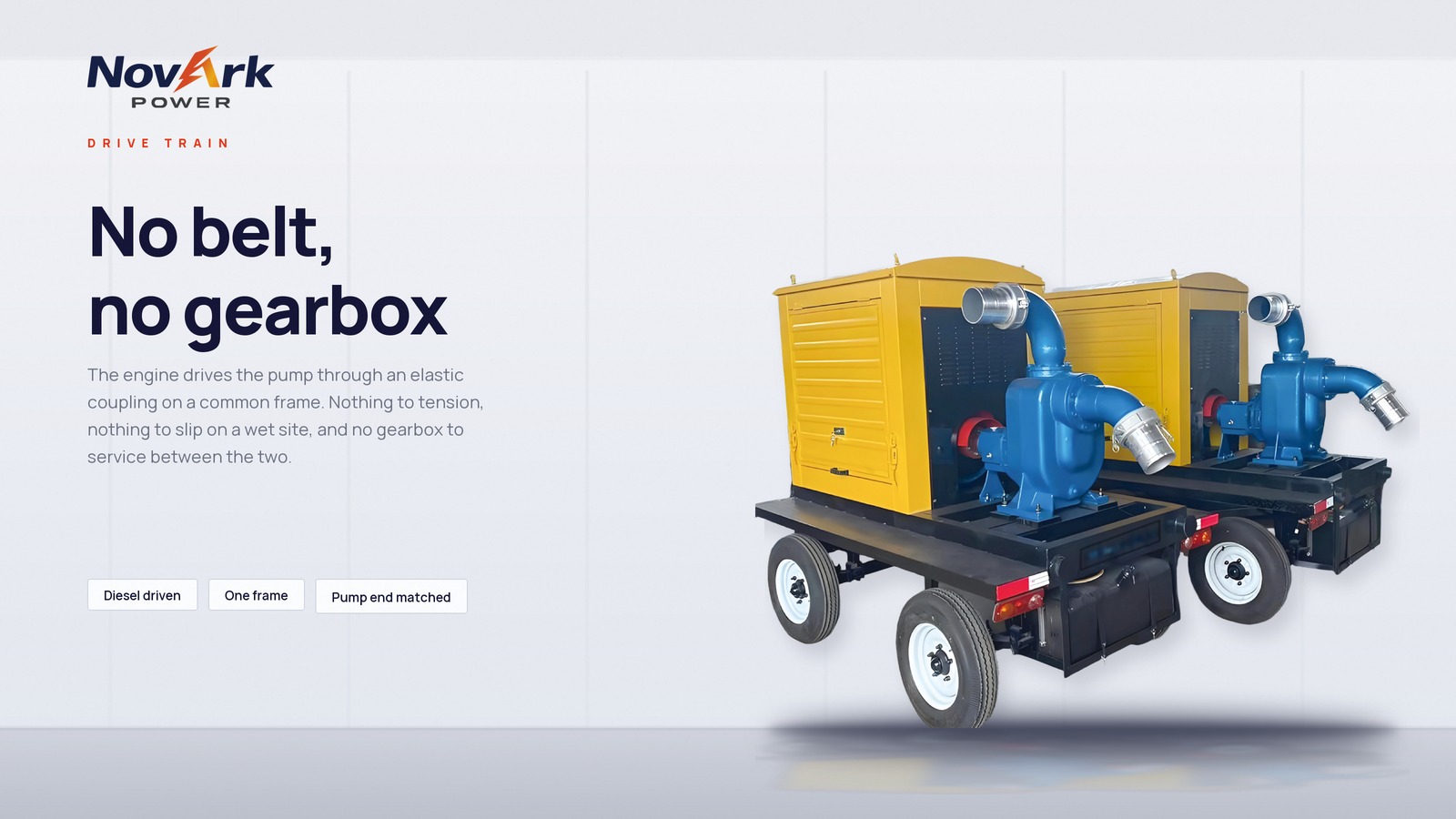
A belt drive needs tension, slips when it gets wet and fails without warning on a site where nobody is watching. The elastic coupling does the same job with one wearable part, and it is visible from outside the frame.

Open frame, silent canopy, containerised and truck-mounted sets, built on Yuchai, Shangchai and Cummins platforms.
All products →Eleven application scenarios, from hospital wards and data halls to desert camps and coastal plants.
All solutions → Medical System Power Security SolutionHospitals & labs
 Electricity Security in Livestock FarmingFarms & ranches
 Solution for Large Construction EnterprisesSite power
 Factory Power Guarantee SolutionProduction lines
 Power Guarantee in Communication SystemTelecom sites
 Dust and Sand Prevention EnvironmentDesert & outdoor
 Solution for Computing Power CenterData centres
 High Altitude Power Guarantee SolutionCold & altitude
 Corrosion Resistant Power Guarantee SolutionCoastal & chemical
 Financial System Power Guarantee SolutionBanks & data
 Mobile Power Guarantee SolutionRapid deployment
| Share | |
|---|---|
| Categories | Water Pump Units |
| Brand | NovArk Power |
| Product Specifications | QD-WP |
| Drive | Diesel engine through an elastic coupling |
| Pump end | Single-stage end-suction centrifugal |
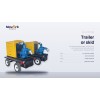
| Configuration | Four-wheel trailer or fixed skid |
| Canopy | Lockable steel, louvered ventilation |
| Suction and discharge | Flanged ports with quick couplings |
| Starting | Electric start from onboard battery |
| Fuel | Tank mounted on the chassis |
| Flow rate | Selected per duty point |
| Total head | Selected per duty point |
| Liquid | Clean or slightly contaminated water |
| Pump materials | Quoted against the pumped liquid |
| Mounting | Fabricated steel chassis, single frame |
| Finish | Polyurethane paint, yellow and blue |
| Duty | Continuous or intermittent, per duty point |
| Application | Irrigation, dewatering, fire water, transfer |
Water pump unit · diesel driven
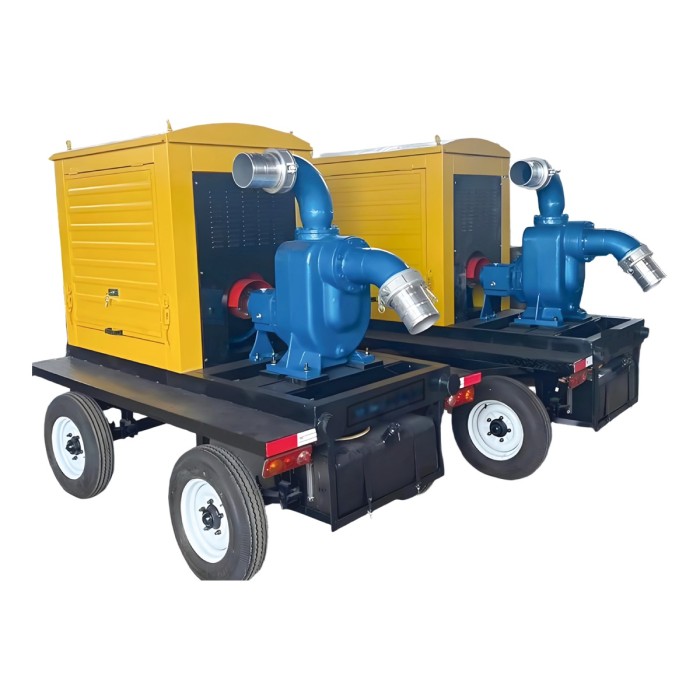
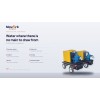
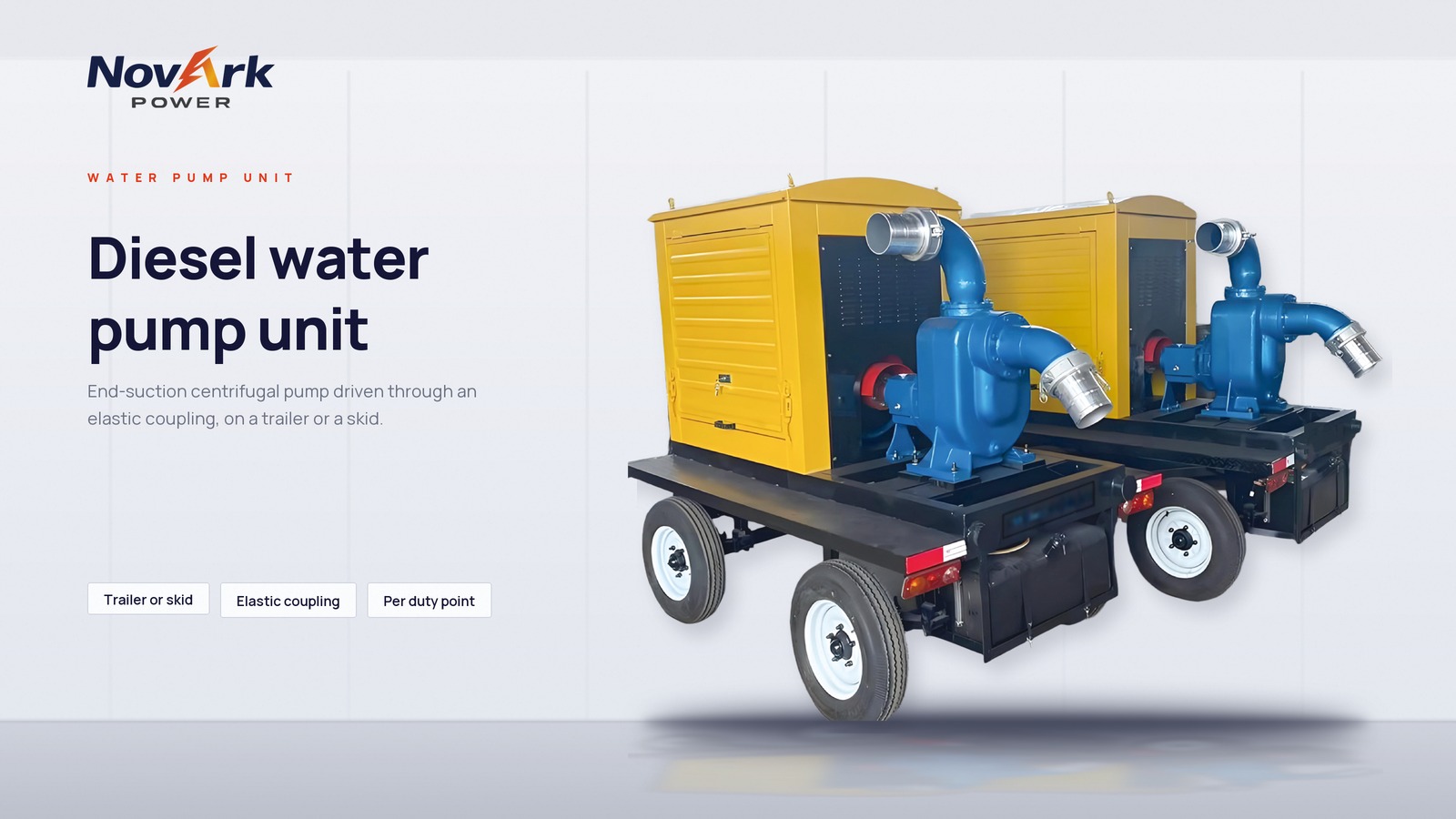
A trailer-mounted pump set built around a single-stage end-suction centrifugal pump, driven by a diesel engine through an elastic coupling. It exists for the places where there is water to move and no power to move it with: a field, a quarry sump, a flooded basement, a jetty, a mine drift.
The engine sits under a lockable steel canopy on the same chassis as the pump, so the set arrives complete — fuel, battery, control panel, suction and discharge already on the frame. Nothing on site has to be aligned, belted or wired before it can be started.
Four decisions
A belt drive needs tension, slips when it gets wet and fails without warning on a site where nobody is watching. The elastic coupling does the same job with one wearable part, and it is visible from outside the frame.
Engine and pump are aligned on a single fabricated chassis and stay aligned, because both are bolted to the same steel rather than to two separate foundations that settle differently.
The lockable louvered canopy covers the engine, battery and control panel. The pump end is deliberately left open: a gland or a seal has to be reachable, and a strainer has to come off without removing panels.
Suction and discharge end in flanged connections with quick couplings, so the set connects to layflat hose, rigid pipe or a hydrant without a bag of adapters. Coupling size is quoted with the pump.
How it is built
The same four blocks serve a 2-inch dewatering set and a large irrigation unit. What changes is the pump end, the engine rating and the frame that carries both.
Industrial diesel with electric start, sized against the power the pump absorbs at the duty point rather than against a nameplate figure. The same engine family we fit to our diesel generator sets, governed for pump duty.
An elastic coupling between flywheel and pump shaft, under a guard. It carries the torque, absorbs the small misalignment that a loaded chassis introduces, and leaves nothing to tension or replace the way a belt would.
Single-stage end-suction centrifugal, horizontal, bolted to the same frame. Suction and discharge elbows are already piped to the pump flanges, so the set arrives with its pipework, not as a pump and a pile of fittings.
Fabricated steel chassis carrying engine, pump, tank and battery. Canopy over the engine and controls only; the pump end stays open for priming, seal checks and clearing a blocked strainer.
Specification
The build below is the same on every set. Flow, head, engine rating and pipe size are quoted against the duty point, because those four numbers decide each other.
Flow and head are not published as a fixed range: a pump set is a point on a curve, not a single figure. Send the duty point and the quotation carries the curve, the absorbed power and the engine rating that follows from it.
Configuration
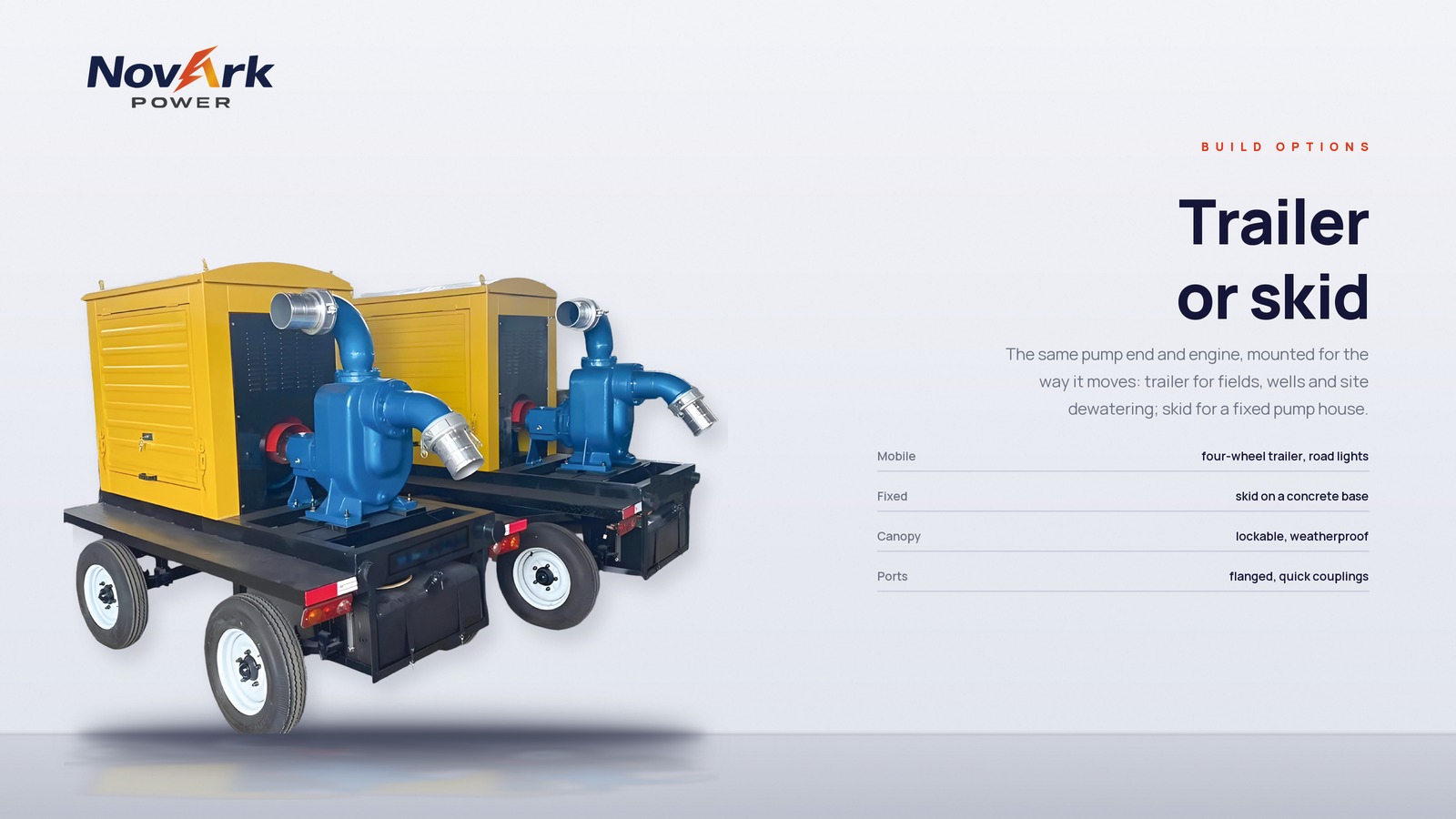
The pump end and the engine do not change between the two. What changes is the frame underneath and how the set reaches the water.
Four-wheel running gear with road lights and a tow hitch, for a set that moves between sumps, fields, jetties or sites behind a pickup. The pump, tank and battery all travel on the trailer, so there is nothing to load separately.
The same chassis without running gear, bolted to a concrete plinth inside a pump house or dropped into a container. A fixed installation gains floor space and loses the tyre and bearing maintenance.
Canopy over the engine as standard. Open set, weatherproof canopy or acoustic canopy are quoted per project, and the canopy is what decides whether the set can stand outdoors through a rainy season.
Where it is specified
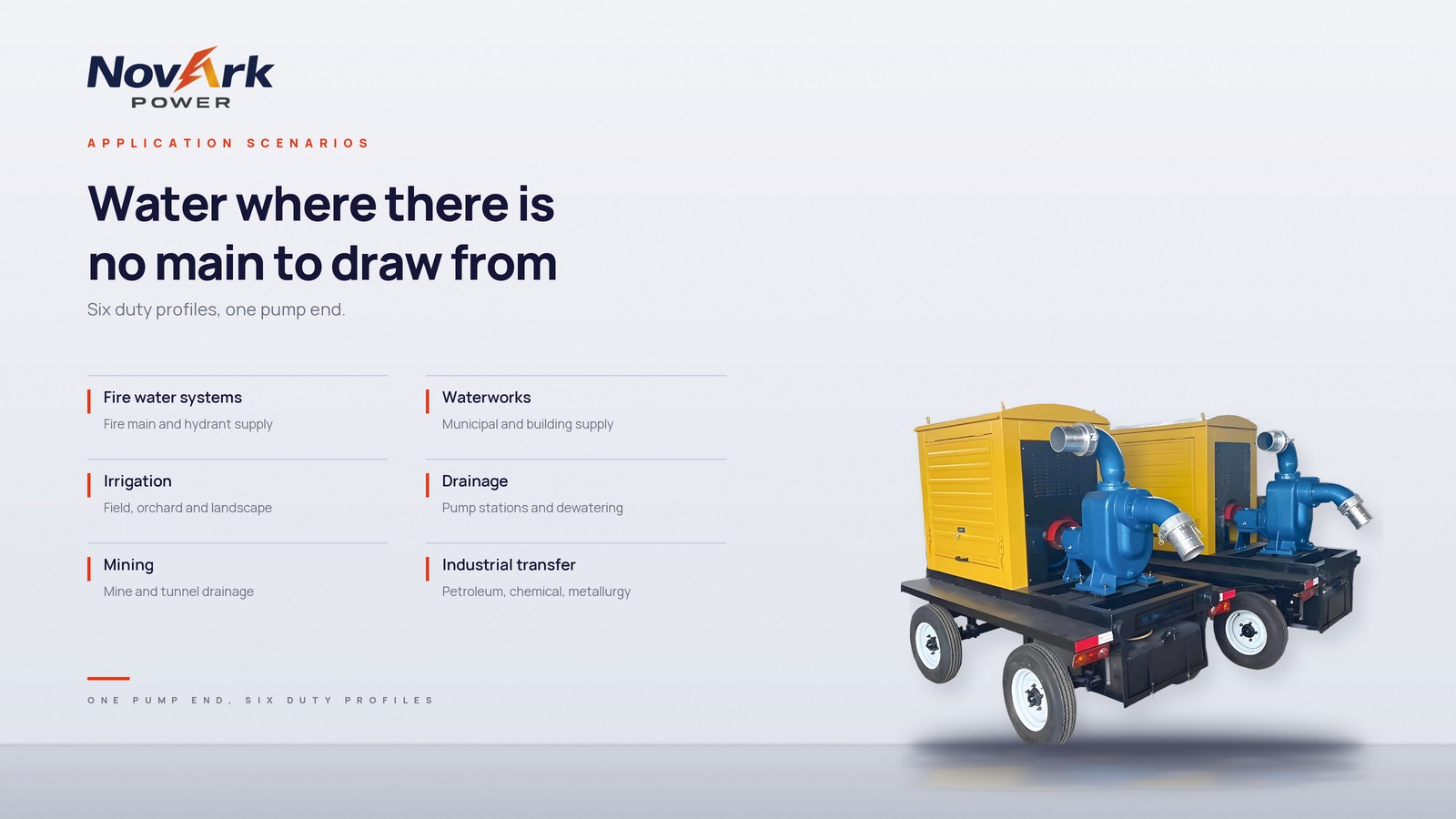
Fire main top-up, hydrant and sprinkler supply where the town main is too small or too far, and the set has to start without a building supply behind it.
Municipal boosting, reservoir transfer and building water supply, including sites that are waiting for a permanent electrical connection.
Field, orchard and landscape supply from a canal, a bore or a reservoir, where the pump moves with the season rather than staying in one place.
Pump stations, construction dewatering and flood response: the duty is intermittent and heavy, and the set is expected to sit idle for months and then start first time.
Mine and tunnel drainage, sump transfer and wash-down water, where the pump is specified against solids in the water and against the cost of stopping the face.
Petroleum, chemical and metallurgical plants moving process water, cooling water and effluent between tanks and treatment stages.
Selection
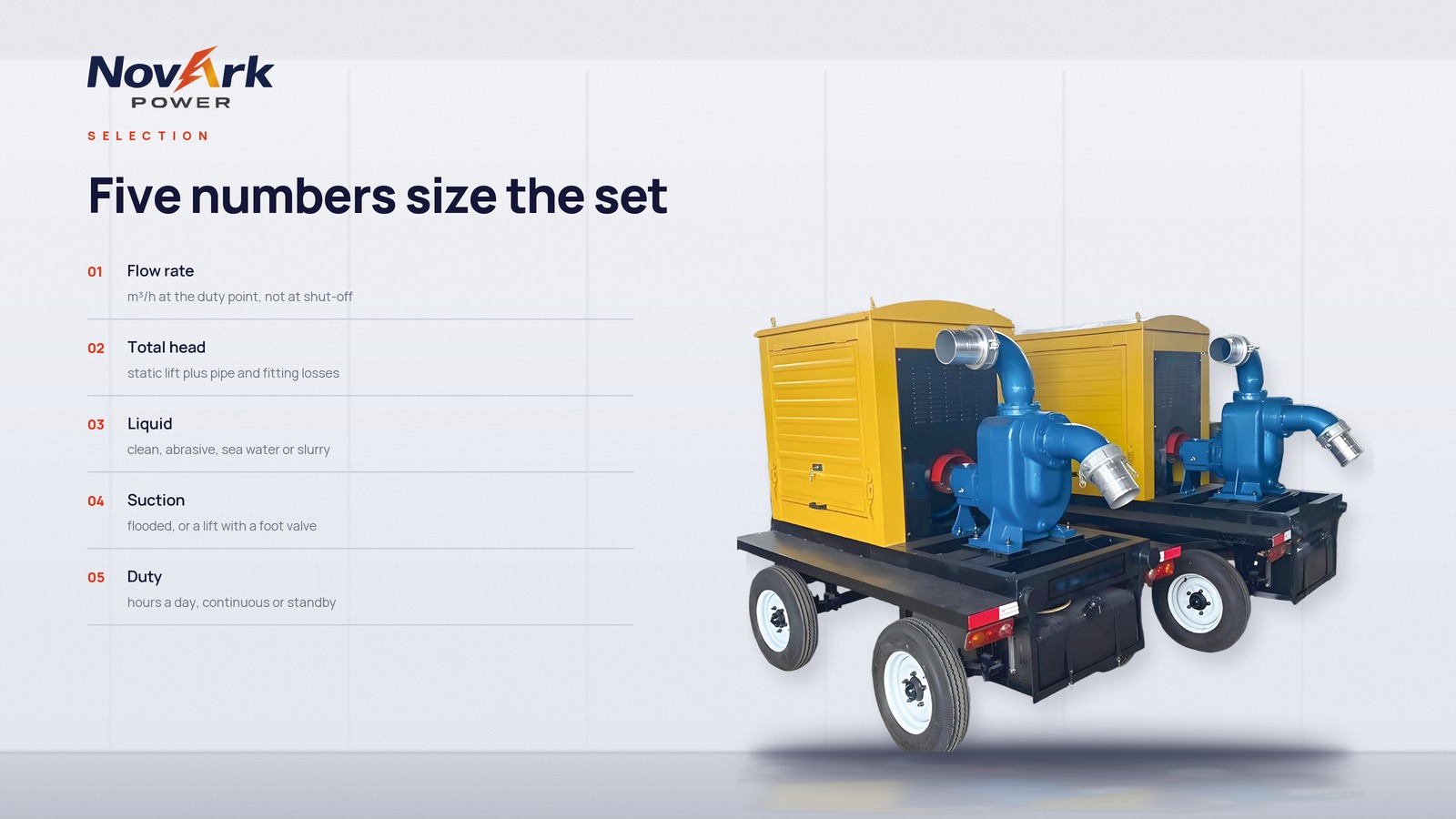
A pump set cannot be quoted from a photograph. These five answers are enough to select the pump end, the engine and the frame, and to put a curve in front of you:
Cubic metres per hour at the duty point. Take it from the actual demand, not from the pipe size or from the pump's maximum.
Static lift plus discharge height plus the friction losses in the pipe, the bends and the fittings. Friction is usually the number that gets underestimated.
Clean water, slightly contaminated, abrasive, sea water or slurry. It decides the pump end, the seal and the materials.
Flooded suction from a tank, or a lift with a foot valve. This is the number that decides whether an end-suction pump can be used at all.
Hours a day and days a year, continuous or standby. It decides the engine rating and the fuel tank.
Selection questions
The set is built around a duty point rather than sold against one catalogue rating. Send the flow in cubic metres per hour, the total head in metres, the liquid and the suction condition, and the quotation comes back with the pump curve, the engine rating and the absorbed power at that point. Flow and head trade against each other along the curve, so a unit quoted for one point will not hold both figures if the site moves to another.
An end-suction centrifugal pump has to be primed before it will draw water. That means either flooded suction from a tank or reservoir above the pump, or a foot valve and a suction line that holds its water between runs. The suction condition is part of the selection, not an afterthought: a lift of a few metres, at altitude, with a long suction line, changes which pump end is quoted.
A pump run dry will destroy its mechanical seal in minutes, so unattended duties need protection rather than optimism. Where the set works a sump that fills and empties, the control panel is fitted with a float switch or low-level sensor that stops the engine before the suction runs clear. That is quoted as part of the control specification, together with the engine safeties.
Flow, head, liquid and suction condition are enough for us to select the pump end and the engine, and to quote the set with its curve. Trailers and skids are quoted from the same sheet, and the full product range sits beside the pump sets.