Professional Generator Set Manufacturer

Power That Never Stops When Darkness Falls, NovArk Powers Through
Our company was established in 2013 and consists of four branches nationwide. As one of the leading OEM manufacturers of diesel generators in China, we have earned a strong reputation and multiple awards over the years, meeting diverse requests from markets around the world.
Home / All / Generator And Vehicle Systems / Generator Paralleling System for Multi-Set Synchronising and Load Sharing

Generator Paralleling System for Multi-Set Synchronising and Load Sharing

Generator Paralleling System for Multi-Set Synchronising and Load Sharing
Generator Paralleling System for Multi-Set Synchronising and Load SharingGenerator Paralleling System for Multi-Set Synchronising and Load SharingGenerator Paralleling System for Multi-Set Synchronising and Load SharingGenerator Paralleling System for Multi-Set Synchronising and Load SharingGenerator Paralleling System for Multi-Set Synchronising and Load Sharing
Share
CategoriesGenerator And Vehicle Systems
BrandNovArk Power
Product SpecificationsQD-PS
System typeMulti-set paralleling and load sharing
Sets per systemTwo or more, sized per project
Control hierarchyPeer to peer, no master or slave
Operating modeAutomatic, with manual fallback
MeteringV, A, kW, PF and Hz on every set
Engine monitoringOil pressure, water temp, speed, battery
Engine safetiesLow oil pressure, high temp, overspeed, underspeed
Electrical protectionOver/under voltage, overcurrent, reverse power
Fault detectionOpen and short circuit on all sensors
SynchronisingAuto frequency tracking and breaker closing
Load sharingActive load averaged across running sets
ChangeoverATS and mains incomer interface
Bus voltage400 / 230 V, 50 / 60 Hz, per project
CubicleFloor-standing steel, sectioned
StandardISO 8528 control and load sharing
Detail Information
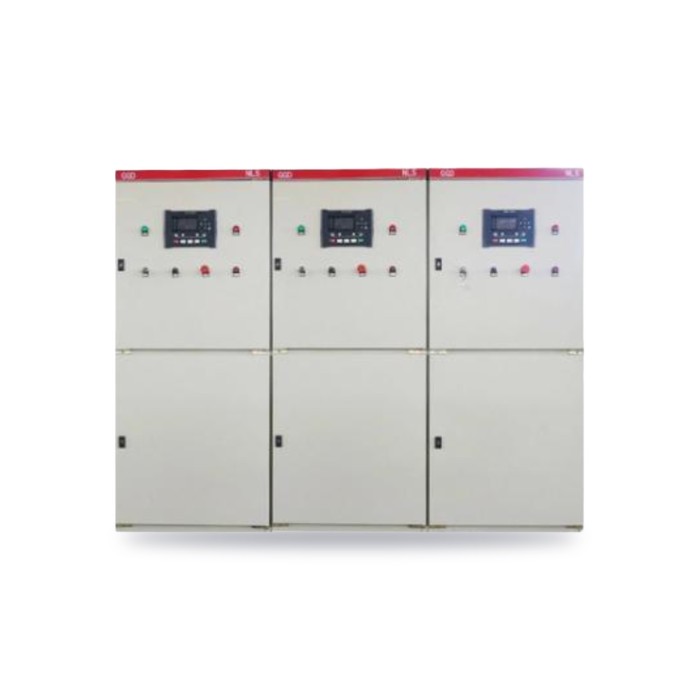
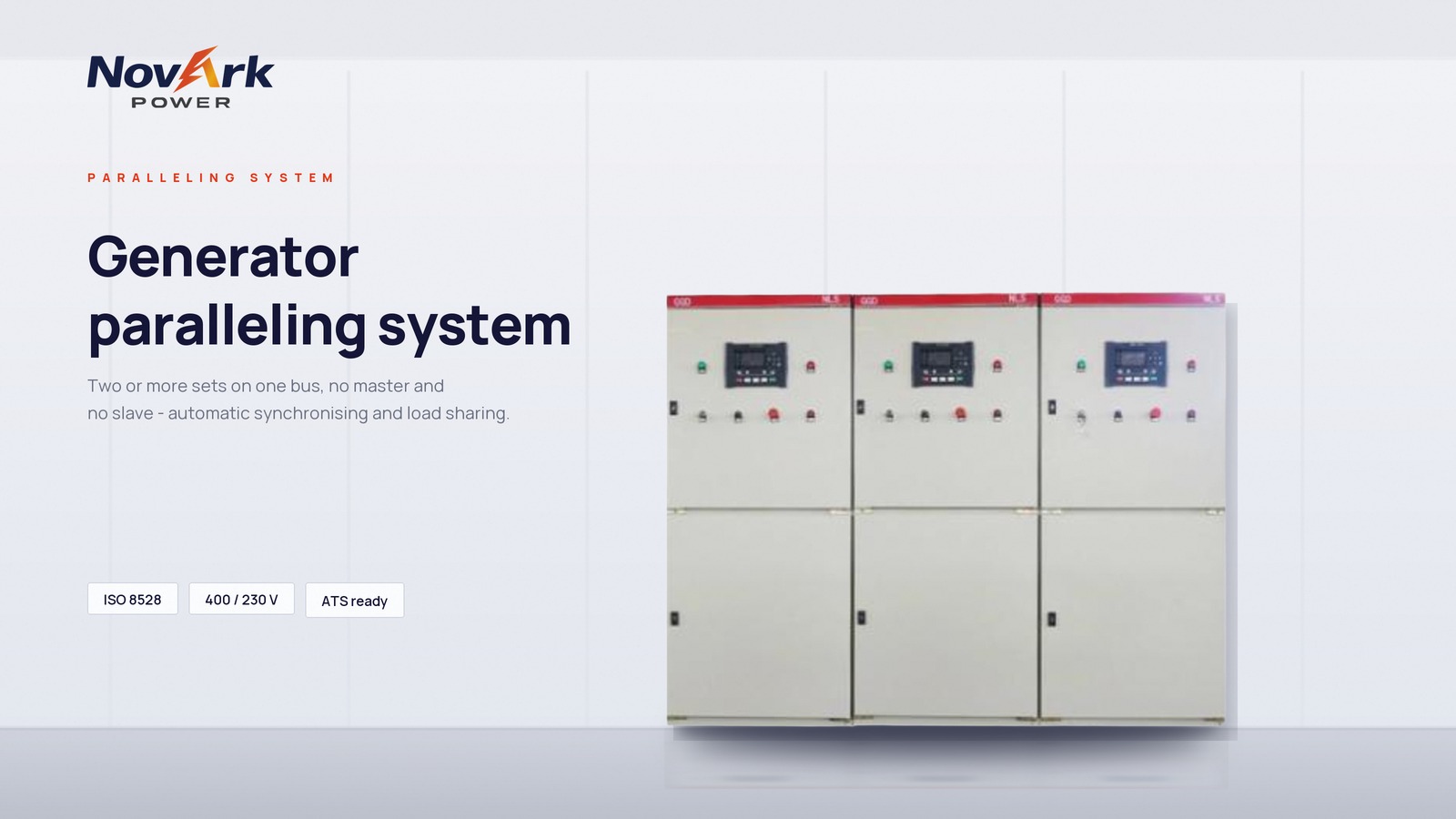
Three-section generator paralleling panel with digital controllers

Paralleling system · two sets and up

Generator Paralleling System for Two or More Sets on One Bus

This is the control and switchgear layer that puts two or more diesel generator sets onto a single bus: it synchronises each set as it comes on, shares the active load between the running machines and manages the changeover to and from the mains supply. A single set can also run through the same panel without paralleling, so one design covers the first set and the fourth — see the generator and vehicle systems range.

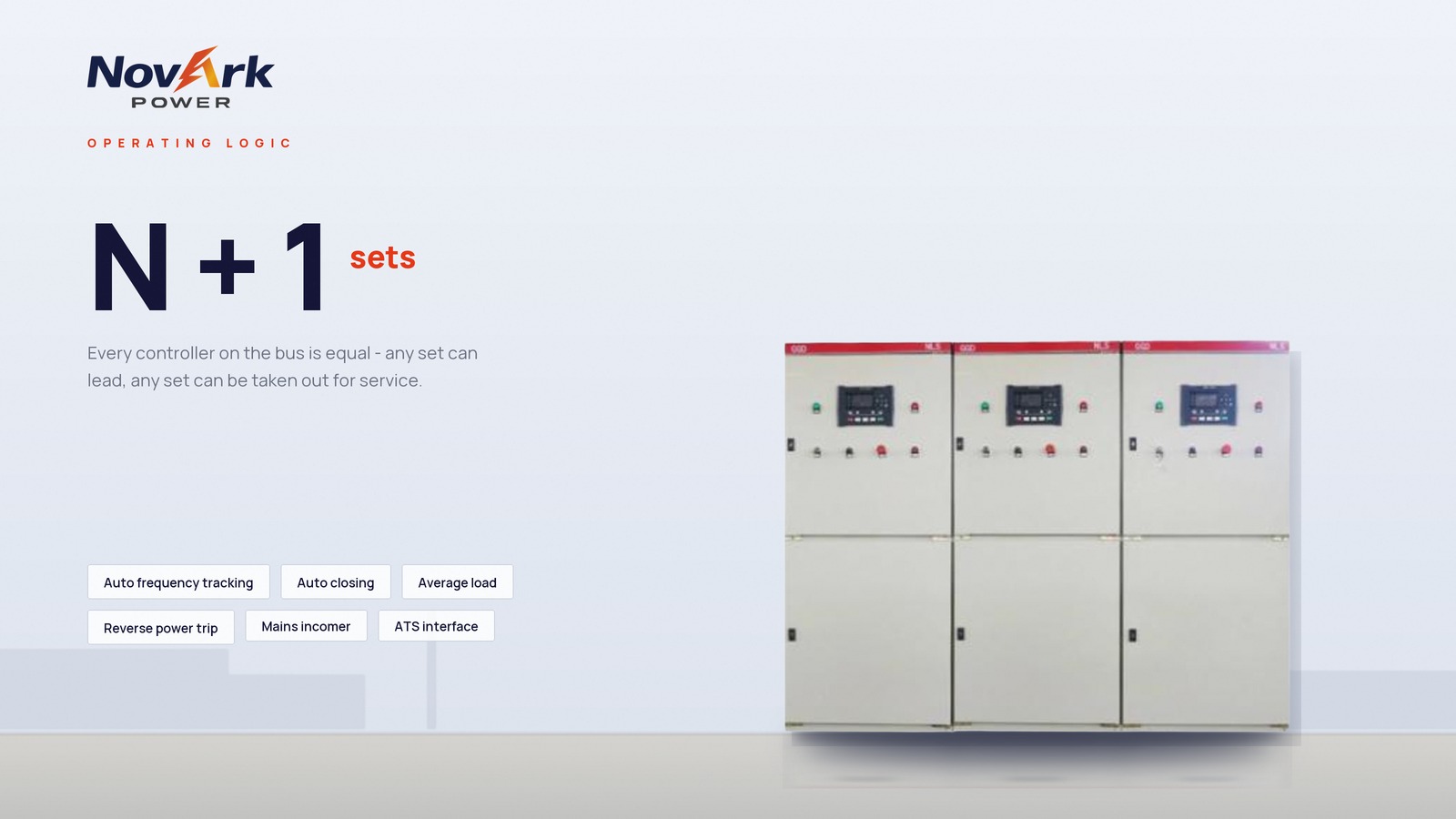
There is no master and no slave. Every controller on the bus is equal: any set can be the first on load, any set can be shut down for service while the others carry the site, and a controller that fails can be replaced without re-addressing the system. Operation is automatic by default, with a manual mode for commissioning and fault finding.

  • 2 +sets on one bus
  • Autosynchronise and close
  • Peerto peer controllers
  • ATSmains changeover

Why peer-to-peer control

Four decisions built into the panel

No master, no slave

A master controller is a single point of failure and a single point of configuration drift. Here each set carries its own controller and its own protection, and load sharing is negotiated between equals, so there is nothing to promote when one machine goes down.

Automatic by default

Start, synchronise, close and share without an operator. Manual mode exposes the same functions for commissioning, so an engineer can jog a breaker or hold a set off the bus while the rest of the site stays on load.

Metering on every set

Line voltage, line current, active power, power factor and frequency are shown per machine, not as a single bus total. That is what makes an unbalance between sets visible before it turns into a failure.

Engine parameters on the same screen

Oil pressure, coolant temperature, speed and battery voltage sit beside the electrical readings, and the panel stops a set on low oil pressure, high water temperature, overspeed or underspeed. Sensor open and short circuit faults are detected too, so a failed sender is not read as a healthy engine.

System architecture

Four blocks from the set to the load

The same four blocks serve a two-set plant room and a containerised power station. What changes is the busbar rating, the breaker frame size and the number of controller sections in the panel.

01

Genset controllers

One controller per set: start and stop, metering, engine safeties, and the signal the synchroniser works from.

02

Paralleling panel

Busbar, motorised breakers and the synchroniser: frequency tracking, automatic closing, active load sharing.

03

Changeover

ATS and mains incomer, so the bus can take the site load on mains failure and hand it back when the supply returns.

04

Load

Essential and non-essential distribution downstream of the changeover, sized against the running set capacity.

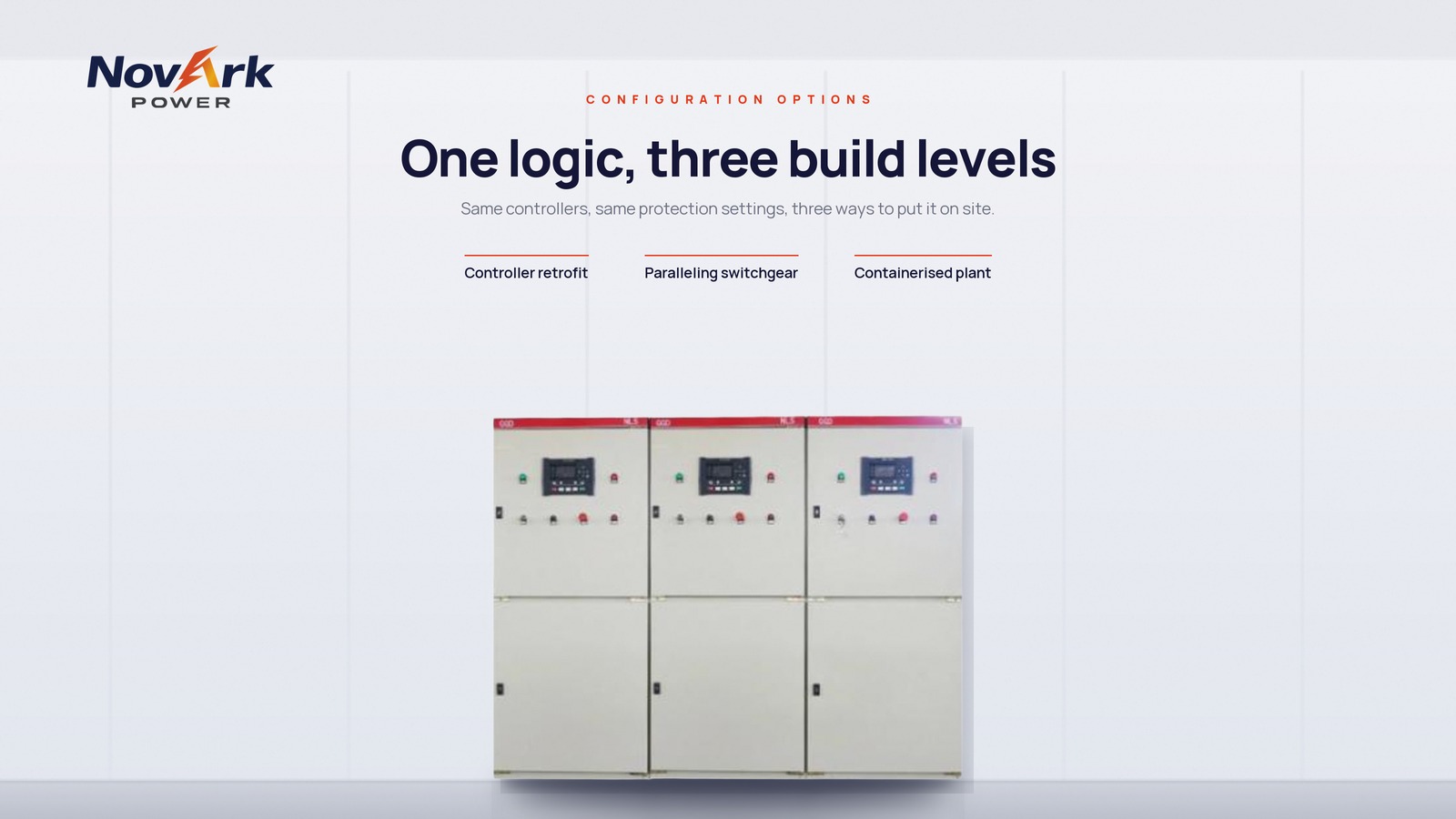
Paralleling system in controller retrofit, switchgear and containerised plant build levels

Functions and protection

What the panel measures, and what it trips on

The function list is the specification that matters on a paralleling panel. Breaker frames and busbar ratings are quoted per project; the monitoring and protection below is what the system does on every project.

Electrical metering
Line voltage, line current, active power, power factor and frequency, measured on every set rather than as a bus total.
Engine monitoring
Oil pressure, coolant temperature, speed and battery voltage, displayed beside the electrical readings.
Engine safeties
Low oil pressure, high water temperature, overspeed and underspeed, wired to stop the set before damage.
Electrical protection
Undervoltage, overcurrent, reverse power and output short circuit, with the breaker tripping on any of them.
Sensor integrity
Open and short circuit detection on the oil pressure, water temperature and speed sensors, so a failed sender reads as a fault and not as a healthy engine.
Synchronising
Automatic frequency tracking, voltage matching and breaker closing as each set comes onto the bus.
Load sharing
Active load averaged across the running sets, so no machine carries more than its share of the site load.
Changeover
ATS and mains incomer interface, for mains failure, return to supply and soft transfer between the two sources.

Settings are commissioned against the set datasheets and the site load profile. Protection curves, trip levels and the load sharing gain are recorded in the handover file, so a replacement controller can be loaded from the record rather than re-tuned on site.

Paralleling system operating logic, N+1 sets on one bus with peer to peer controllers

Operating modes

Three ways a site runs on the same panel

Standalone

A single set through the same panel, no paralleling. The panel is the changeover and the protection, and a second set can be added later without replacing it.

Island parallel, N+1

Two or more sets share the load, so one can be out for service and the site still runs. Load sharing holds each machine to the same share of the load, not the same kW.

Mains parallel and changeover

The bus runs alongside the mains for peak shaving or a soft transfer, and the ATS hands the load back once the supply is stable again.

Where it is specified

Applications for multi-set installations

01

Hospitals and laboratories

Theatre, ICU and essential loads carried by two or three sets, with one out for service at any time and no single point of failure on the bus.

02

Data centres

Hall-level N+1 redundancy, where the paralleling panel is what lets a set be isolated for maintenance without dropping the critical load.

03

Manufacturing

Base load, peak shaving and standby on one bus, with the mains incomer taking the plant back when the tariff or the supply allows it.

04

Telecom sites

Multi-set base stations where the load grows in steps and a second set is cheaper than a larger transformer or a bigger single machine.

05

Commercial buildings

Mains failure and ATS changeover for lift, HVAC and life-safety loads, with the running hours spread across the sets.

06

Marine and port

Ship and shore-side supply, including yard power where two sets run in parallel rather than one oversized machine at light load.

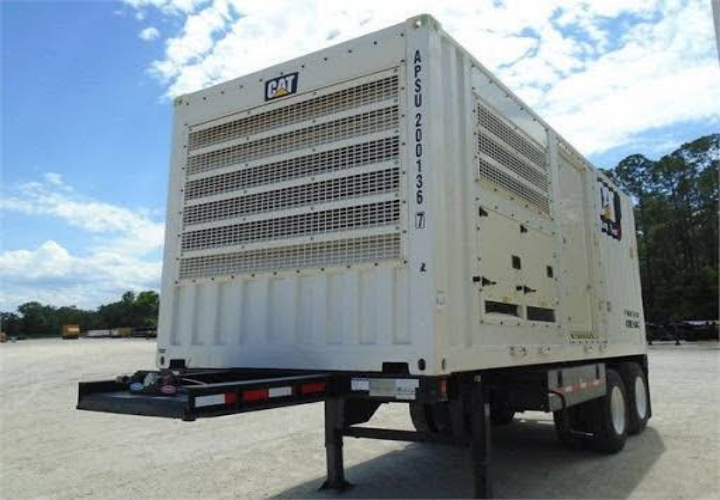
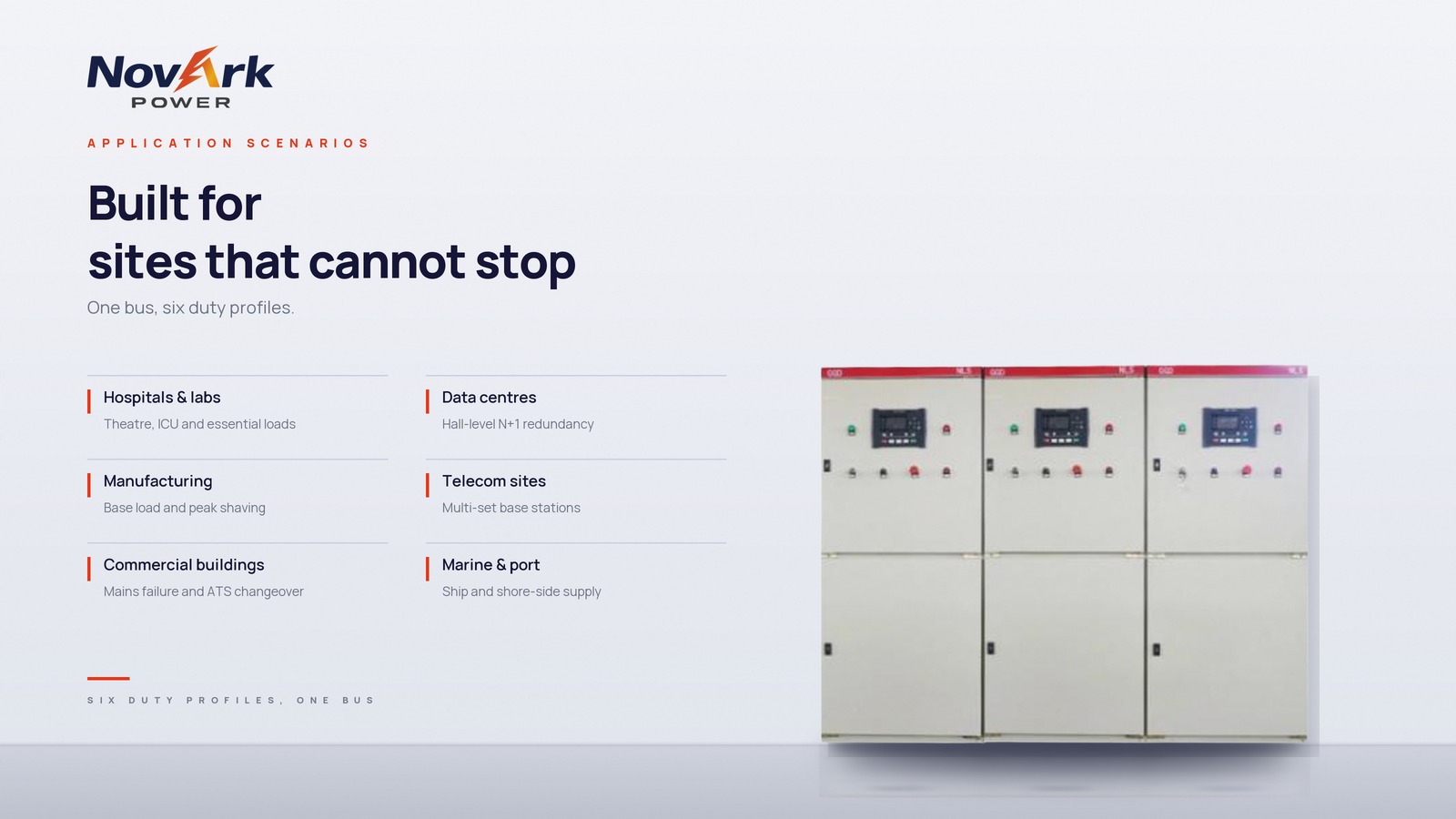
Paralleling system applications: hospitals, data centres, manufacturing, telecom, commercial buildings, marine

Testing and handover

Tested as a system, not as boxes

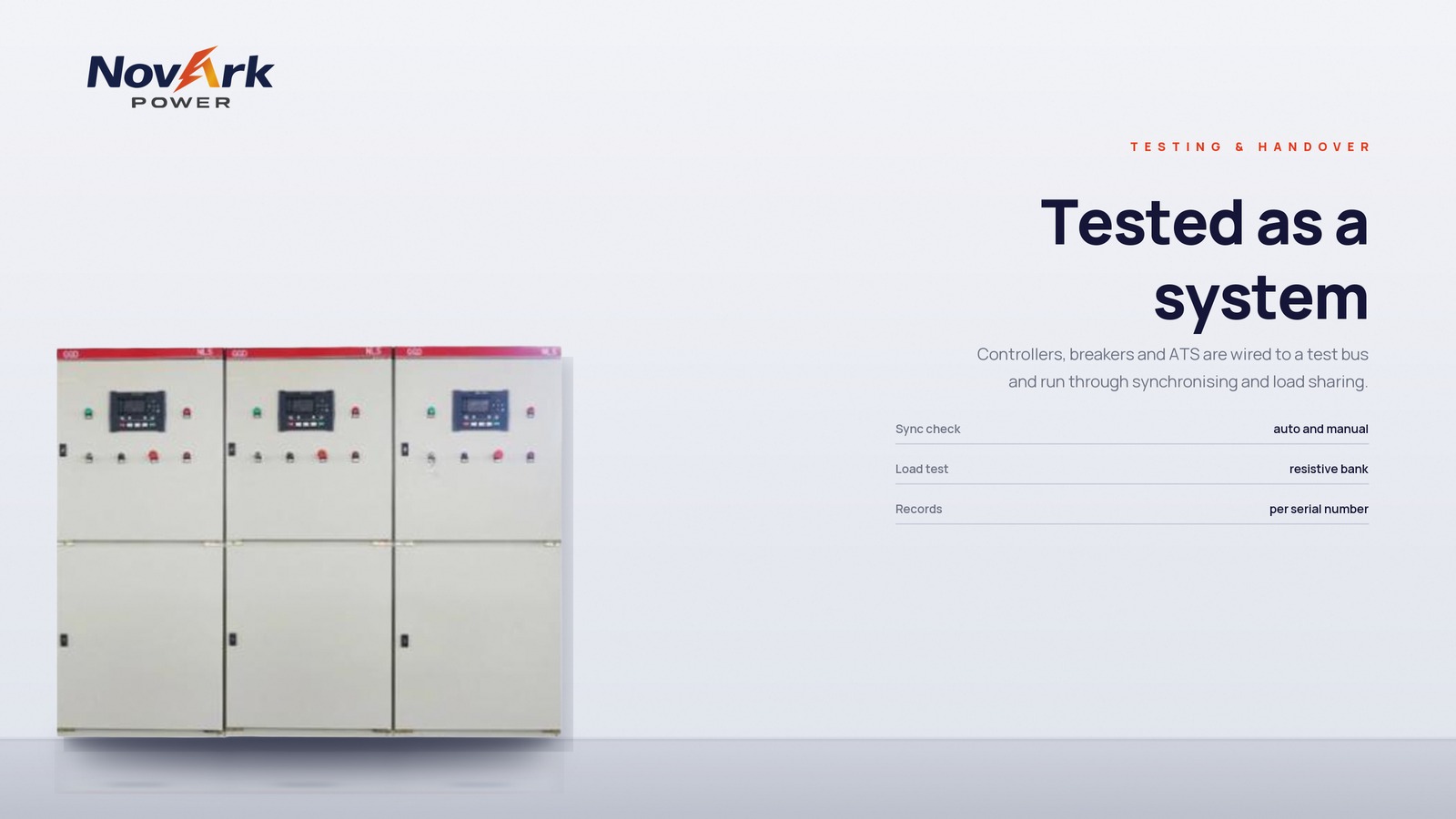
Controllers, breakers, current transformers and the ATS are wired to a test bus in the works and run through the sequence the site will use: automatic start, synchronising and closing of the second and third set, load sharing against a resistive bank, reverse power trip and blackout recovery.

A fault found at this stage costs a wiring change. The same fault found on site costs a commissioning week, so the test sheet travels with the panel and the site procedure is written from it. The verification carried out again on site before handover is described in how load bank testing works, and the spares worth holding for a multi-set plant are listed in the critical spare parts guide.

Paralleling panel under functional test on a test bus before shipment

Selection questions

Sizing a multi-set installation

How many sets can be paralleled on one panel?

There is no fixed ceiling in the control layer: the practical limit is the busbar and breaker rating of the panel, not the controller. Systems are built for two sets as often as for six, and the panel is sized from the set ratings and the site load profile you send us rather than from a catalogue number.

Can the system be fitted to generator sets we already own?

Yes. A retrofit replaces the controllers and adds the synchronising and load sharing layer, keeping the existing alternators, breakers and skid. The condition of the existing breakers and the wiring between the sets decides how much of the panel has to be rebuilt, so a site survey precedes the quotation.

What happens when one set trips while the site is on load?

The remaining sets pick up the load up to their combined capacity, and the tripped set is locked out by reverse power and its own engine safeties so it cannot motor on the bus. If the site load exceeds what the remaining sets can carry, the system trips on overload rather than let one machine run beyond its rating. That is the argument for N+1 sizing rather than sizing to the last kilowatt.

Planning a multi-set installation?

Send the set ratings, the site load profile and the switchboard arrangement. We will size the busbar, the breakers and the controller count, and quote the panel with the sets.

Browse paralleling systems
Related Products
    Please send your message to us
    *Email
    *Phone
    *Title
    *Content
    Upload
    • Only supports .rar/.zip/.jpg/.png/.gif/.doc/.xls/.pdf, maximum 20MB.