
Huarong Xiangjiang Bank Data Center — Diesel Generator Project
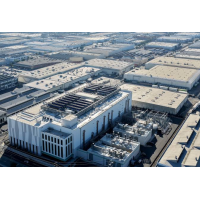
Huarong Xiangjiang Bank is a provincial joint-stock commercial bank with its headquarters data center located in Changsha's High-Tech Zone. The data center hosts core banking systems, mobile payment platforms, credit-risk modeling clusters, and disaster-recovery (DR) infrastructure — all classified as Tier-IV mission-critical loads under GB 50174-2017.
Before we engaged, the data center's backup power architecture had several critical vulnerabilities:
- Aging legacy generators: The original two 800 kW units were commissioned in 2012, with output power attenuated by ~22%. During summer peak loads they could no longer carry the full IT + cooling load simultaneously.
- No N+1 redundancy: The site had only 2 units in a non-paralleling configuration. A single generator failure meant zero backup for the entire data hall — an unacceptable single point of failure.
- Slow ATS switching: The existing transfer switch required manual confirmation and took 30–45 seconds to transition, causing SAN storage arrays to drop connections and triggering application-level alarms.
- No remote monitoring: Operations staff had to physically walk to the generator room to check status. During a 2025 storm-induced outage, the on-call engineer was off-site and could not verify generator health for 25 minutes.
- Regulatory pressure: The People's Bank of China (PBOC) and CBIRC had issued new guidelines requiring financial data centers to demonstrate "zero-data-loss" DR capabilities, including quarterly full-load black-start drills — which the existing setup could not safely perform.
The bank launched a formal tender for a "Next-Generation Data Center Backup Power System" with the following core objectives:
- ✓Achieve true N+1 redundancy with paralleling capability for the full 2400 kW critical load.
- ✓Guarantee <10 second automatic transfer from grid to generator power with zero IT impact.
- ✓Integrate with the bank's existing DCIM (Data Center Infrastructure Management) platform for unified monitoring.
- ✓Pass PBOC/CBIRC compliance audits with documented quarterly load-bank test reports.
- ✓Minimize downtime during cutover — all switchover work restricted to a single 4-hour maintenance window.
- Pre-qualification: Only manufacturers or Tier-1 OEM-authorized integrators with ≥3 financial-data-center references in the past 5 years were admitted. 12 vendors applied; 5 passed pre-qualification.
- Technical bid evaluation: Weighted 60%. Key scoring items included paralleling scheme, generator transient response (voltage/frequency dip under step load), ATS design, and DCIM integration plan. Our detailed load-flow simulation report was cited by the evaluation committee as "industry-best practice."
- Onsite demonstration: Shortlisted bidders were required to perform a live 100% load transfer demo at our Changsha test facility. Our 3×1000 kW Cummins paralleling set completed a black-start-to-full-load transition in 7.2 seconds, the fastest among all bidders.
- Commercial bid: Evaluated within a control price of RMB 18.6 million. Our bid of RMB 16.8 million offered the best value-to-performance ratio.
- Award: We were named the sole winning bidder in Q3 2025 and signed a fixed-price lump-sum contract covering equipment supply, installation, commissioning, and 5-year full-lifecycle O&M.
Beyond simply replacing old equipment, the bank's strategic goals for this project were:
- ✓Establish a Tier-IV equivalent backup power infrastructure that could sustain the full data center for 72+ hours on a single fuel tank.
- ✓Enable compliance-by-design: every test, inspection, and maintenance action automatically generates an audit-ready report for PBOC/CBIRC reviews.
- ✓Shift from "break-fix" to predictive maintenance through IoT-driven condition monitoring, eliminating unplanned downtime.
- ✓Build an internal "expert team" within the bank's facilities department through hands-on training and knowledge transfer.
We sold "zero-data-loss power assurance" — not just hardware. The architecture comprised five integrated layers:
| Layer | Technical Solution | Risk Addressed |
|---|---|---|
| Prime Power | 3 × 1000 kW Cummins QSK38-G8 diesel gensets in N+1 auto-paralleling configuration. Each unit +25% rated capacity margin. | Eliminates single point of failure; any one unit can fail without impacting the data hall. |
| Paralleling & Sync | DSE 8620 MKII paralleling controllers with kW-load-share algorithm; cyclic priority rotation to equalize run hours. | Prevents overload during step-load events; extends engine life through even wear. |
| Transfer Switch | 2 × 2500A Schneider MTZ ATS with 0–10 s adjustable transfer delay; bypass isolation for maintenance. | Sub-10-second seamless transfer; maintenance without data center shutdown. |
| Fuel System | 10,000 L underground double-wall diesel tank + daily 1000 L sub-base tank; automatic fuel polishing every 72 h. | 72+ hour runtime at full load; clean fuel prevents injector clogging. |
| IoT & DCIM | Edge IoT gateway (SNMP v3 + Modbus TCP) feeding live data to Schneider EcoStruxure; mobile alerts via WeChat + SMS. | Real-time visibility; automatic compliance reports for PBOC/CBIRC audits. |
| Acoustic & Emission | Containerized sound-attenuated enclosures (≤75 dB @ 7 m); DOC+DPF exhaust after-treatment; anti-vibration mounts. | Complies with urban data-center noise & emission standards; no neighbor complaints. |
The entire cutover was executed within a single 4-hour maintenance window on a Sunday morning, with zero impact on banking operations. The phased approach:
We performed GPR (Ground Penetrating Radar) scanning to locate existing underground utilities, then poured three reinforced concrete plinths (6 m × 2.5 m each) with integral vibration isolators. All hot-work permits were coordinated with the bank's security department and the local fire bureau.
Three 1000 kW containerized units were delivered on low-bed trailers and positioned using hydraulic jacking rollers. The heaviest lift (14.8 tonnes) was completed in 90 minutes. All work was conducted inside the designated 4-hour window.
Installed 3 sets of 4-core 240 mm² copper cables from genset output to the paralleling bus. DSE 8620 controllers were networked via redundant fiber ring. ATS units were wired with both primary and secondary sense leads for dual-source validation.
The 10,000 L underground tank was installed with leak-detection interstitial monitoring. A 1000 L sub-base day tank was plumbed to each generator with automatic fuel-polishing circulation. All welding was X-ray inspected per ASME Section IX.
Our IoT gateway was registered on the bank's existing Schneider EcoStruxure platform within 2 hours. We then conducted a 72-hour endurance run at progressive loads (25% → 50% → 75% → 100%), with full data logging. Voltage dip was measured at 2.1% and frequency deviation at ±0.15 Hz — both well within Tier-IV tolerances.
We performed a simulated grid-failure black-start drill witnessed by PBOC representatives. Total transition time: 7.8 seconds from grid loss to full IT load transfer. Subsequently, we delivered a 5-day intensive training program for the bank's facilities team, covering paralleling logic, emergency manual control, and DCIM alarm management.
Six months post-commissioning, the system has demonstrated flawless performance across all KPIs:
- ✓Zero data loss: During the 2026 spring thunderstorm season, the grid suffered 3 momentary interruptions. Each time, the paralleling system transferred load in under 8 seconds with zero IT impact — confirmed by SAN array logs showing no I/O errors.
- ✓Regulatory approval: The PBOC Hunan branch conducted an on-site inspection in March 2026 and issued a "zero non-conformance" report — the first data center in the province to achieve this under the new 2025 guidelines.
- ✓Operational autonomy: The bank's facilities team now independently manages daily start/stop, load-bank testing, and alarm response — a complete handover was achieved 3 months ahead of schedule.
- ✓Cost optimization: Cyclic load sharing extended estimated engine life by ~18%; fuel polishing eliminated the need for bi-annual tank cleaning (saving ~RMB 80,000/year).
- ✓Scalability: The paralleling architecture allows a 4th unit to be added without downtime, providing a clear roadmap for the bank's planned 2027 data-hall expansion.
"In our industry, a power outage isn't just an inconvenience — it's a regulatory event. Since commissioning this system, we've weathered three grid disturbances without a single alarm reaching the NOC. The seamless integration with our DCIM platform means our operators see generator status on the same dashboard as server health. It's the gold standard for financial data-center backup power." — Director of Infrastructure, Huarong Xiangjiang Bank IT Department
Get a free power system design consultation for your diesel generator set project. Our engineers will analyze your requirements and deliver a tailored generator solution.
- Solution for Power Guarantee in Communication System
- NovArk Power Diesel Generator Set Financial System Power Guarantee Solution
- NovArk Power supply guarantee solution for large construction enterprises
- NovArk Power Medical System Power Security Solution
- NovArk Power Security Solution for Computing Power Center
- NovArk Power supply guarantee solution for large construction
Are you looking for a reliable manufacturer?
We can quickly provide customers with market analysis, technical support and customized services.